Editorial Standards: How Barefoot Basil Researches, Reviews, and Recommends
TL;DR
Barefoot Basil recommendations for women over 40 are grounded in peer-reviewed science, hands-on product testing, and rigorous brand vetting, not marketing claims. Sponsorships and affiliate links never buy a positive review.
At Barefoot Basil, my goal is simple: to help women over 40 make informed decisions based on the best available scientific evidence, practical experience, and transparency, not marketing claims alone.
Every article, buying guide, and product review follows the same research principles, whether I’m evaluating a supplement, skincare product, fitness equipment, or wellness device.
How Products Are Selected
When researching a topic, I first evaluate whether the claimed benefits are supported by scientific evidence before considering individual products or brands. It applies to all products, supplements, red light therapy devices, and skin care products.
How Scientific Evidence Is Evaluated
When analysing scientific data, I consult multiple reliable sources, including Consensus, for quick overviews of the academic literature. I also look into reliable academic research publication sites like PubMed, Science Direct,
When selecting what studies to prioritise. Rather than relying solely on study conclusions or abstracts, I read the full paper whenever possible to better understand the study design, methodology, limitations, and clinical relevance.
I also focus on human randomised controlled trials instead of basing the outcomes on vitro or animal studies ( that a lot of influencers might do on social media). While animal and laboratory studies are often an important first step, I place greater weight on well-designed human clinical trials whenever they’re available, as these are generally more applicable to real-world health decisions.
I also look at the conflict of interest of the scientists who worked on the study, and if a specific industry or company sponsored the study. It does not mean the findings are invalid, but if money is involved, I always take them with a pinch of salt.
I always try to find replicated studies to make sure that the findings from one study are not biased.
When evaluating health claims, I generally prioritise evidence in this order:
- Systematic reviews and meta-analyses
- Randomised controlled trials in humans
- Cohort and observational studies
- Animal studies
- Laboratory studies
- Expert opinion
My approach to interpreting scientific research has been shaped by formal education, including the Plant-Based Nutrition Certificate from the T. Colin Campbell Center for Nutrition Studies as well as Precision Nutrition Level 1 Certification, alongside ongoing independent learning.
Where available, I also refer to guidance from recognised organisations such as the World Health Organisation (WHO), National Institutes of Health (NIH), National Institute for Health and Care Excellence (NICE), American College of Obstetricians and Gynecologists (ACOG), and the North American Menopause Society (The Menopause Society), depending on the topic.
After I learn all about the science of the specific product, I then look at reputable brands.
Brand Assessment
I generally favour brands that demonstrate genuine expertise, transparent manufacturing practices, and a clear commitment to quality over companies that simply rebrand generic products. I also consider product recalls, regulatory warnings, independent testing, customer service reputation, and significant legal issues where relevant. I not only support established, big brands, but I also make sure the smaller brands do the right testing and have good production standards.
Product Selection
Supplements
Due to supplements being less controlled than medicine, brands like to be creative with their marketing. When choosing a good quality supplement, the back label is way more important than large words on the front.
When selecting supplements, I do a lot of research on the specific ingredients, their most bioavailable forms, and dosage to make sure you get the best for your money.
I make sure to choose products with certifications like organic, non-GMO, and third party testing.
I also test a lot of supplements that are beneficial for perimenopause and general wellbeing myself and always note the ones I have had a good experience with. My testing includes searching multiple brands of creatine, magnesium glycinate, and protein powders, but also more holistic and less researched supplements like shilajit, sea moss, and lion’s mane.
Personal testing of the products
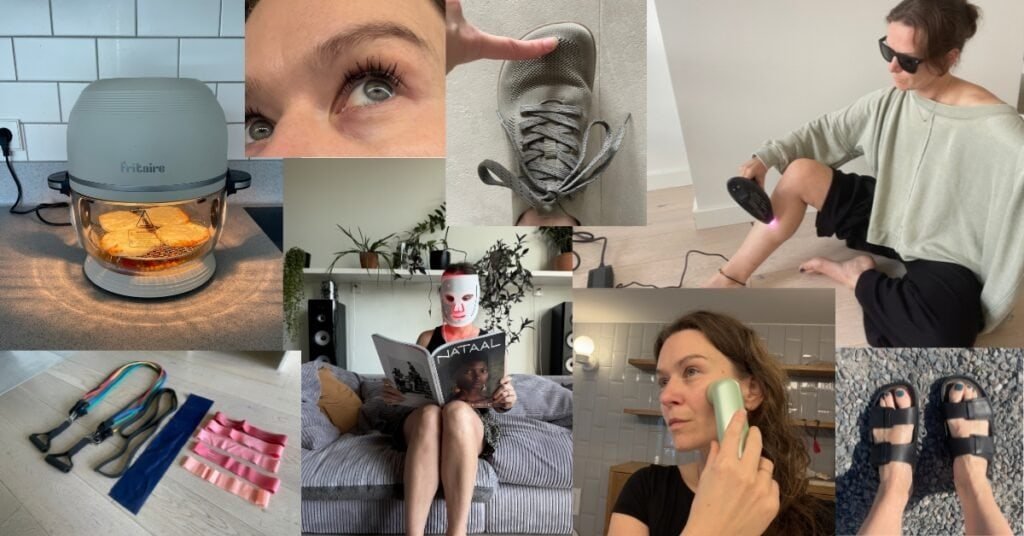
Whenever practical, I personally test products before recommending them. Depending on the type of product, testing may take weeks or months to evaluate usability, quality, durability, and overall value. Reviews are updated when longer-term use provides additional insights.
When hands-on testing isn’t possible, recommendations are based on published research, product specifications, ingredient analysis, independent testing where available, and user experiences gathered from multiple reputable sources.
A design perspective
Before specialising in nutrition and menopause coaching, I studied Product Design in Lithuania and Interior Design in the UK. Although my career has evolved, those studies gave me a lasting appreciation for thoughtful product design, functionality, ergonomics, and quality. Today, they complement my research process by helping me evaluate not only the scientific evidence behind a product, but also how well it is designed, built, and used in everyday life.
Analysing User Reviews
If I can’t test a specific product myself, I analyse product reviews on marketplace platforms and forums. Community discussions on platforms such as Reddit can provide useful insight into long-term user experiences. While anecdotal feedback is never treated as scientific evidence, it helps identify recurring strengths, weaknesses, and practical issues that may not appear in clinical studies or product specifications.
I also check out wellness blogs and video reviews to get a full picture when needed, especially when reviewing technical products like a red light therapy mask or a laser hair removal device.
Third-party Tools To Help with Research
Although I never rely on third-party tools, I do use them to speed up the process in my initial research stage. These tools include the Yuka app for a glance at ingredients in skincare and food. I do not rely on it completely; however, it does help to highlight ingredients that could be potential hormone disruptors or allergens. I also use Better Buy to find out more about sustainability, labour ethics, ingredient safety, and more.
How Products Are Scored
I develop a scoring system for each product group to make sure I cover the most important aspects. This allows me to evaluate the products in the most detailed way.
Every product category has its own evaluation criteria.
For example:
Supplements
- ingredient quality
- strength
- bioavailability
- unnecessary additives
- third-party testing
- value
Red light therapy
- wavelength
- Irradiance
- Amount/quality of diodes
- treatment area
- safety certifications
- build quality
- warranty
- value
Independence & Sponsored Products
Can brands pay for a positive review? No. I do work with brands on a paid or gifting basis, and it is an important part of Barefoot Basil, as it keeps the platform going. However, I am very selective with the brands I work with and research them before agreeing to work with a specific brand or review a product.
Any products added to Barefoot Basil align with my values. If I work with a supplement brand, they are scrutinised through the same scoring system as any others. If I test a product, I make sure to test it for long enough to fully understand the benefits. I always highlight what I like and what could be better. Let’s be honest, there are no such things as perfect products.
I reject partnerships with brands that promote products with no scientific backing, use toxic ingredients, are not of good quality, or in any way do not align with Barefoot Basil values.
Affiliate Disclosure
I also work on an affiliate link basis. You can read more about my affiliate disclosure here.
What “Clean” and “Non-toxic” mean at Barefoot Basil
Everything I recommend is chosen with one priority: that it supports your health rather than putting it at risk. When I focus on harmful ingredients, I do not want to scaremonger you, as I understand that we can not avoid everything that can potentially be harmful to us, as, especially now, it is impossible to completely avoid microplastics, allergens, hormone disruptors or carcinogenic ingredients.
In supplements, it means there are no thickeners, sweeteners, artificial flavours or any other unnecessary ingredients, only the beneficial ones.
In beauty products, it means no allergens like perfume, no hormone disruptors or ingredients with unnecessary environmental concerns where suitable alternatives exist.
In kitchen appliances, it means no Teflon, PFAS, or any other harmful ingredients that could leach into your food. Everything I recommend is chosen with one priority: that it supports your health rather than putting it at risk.
How Often Articles Are Updated
I make sure to keep the information fresh and update or remove the products to highlight the current ingredient lists. I try to do my best to keep up with the science and news and update the articles regularly.
If you have noticed any discrepancy in the product ingredient list, please contact me at hello@barefootbasil.com
About Silvija Meilunaite
My Certifications
- Precision Nutrition Level 1 Certified Nutrition Coach (PN1-NC)
- Girls Gone Strong Certified Menopause Coaching Specialist (CSMC)
- Plant-Based Nutrition Certificate (T. Colin Campbell Center for Nutrition Studies )
For the full list of my certifications, head to the About page.
Silvija Meilunaite LinkedIn
What Barefoot Basil Does Not Do
- Barefoot Basil does not accept payment in exchange for positive reviews.
- Barefoot Basil does not recommend products solely because they pay higher affiliate commissions.
- Barefoot Basil does not replace personalised medical advice from a qualified healthcare professional.
- Barefoot Basil does not recommend supplements or therapies that lack sufficient evidence without clearly stating that the evidence is limited.
- Barefoot Basil does not set up unrealistic expectations about any recommended supplements, beauty products, or wellness protocols
Wellness doesn’t have to be perfect to make a difference.
My goal isn’t to help you eliminate every possible risk or chase every new trend. It’s to help you make practical, evidence-based choices that support your health through perimenopause and beyond, one informed decision at a time.