In this transitional period, I want to learn as much as I can about the food that supports my hormonal health and can help me live a long and healthy life.
Recently, the moringa tree gained popularity in the Western well-being industry and made it to the trendy superfood list. Moringa shows promise as a natural supplement to support hormonal balance and reduce perimenopause symptoms due to its phytoestrogen content and antioxidant effects.
I wanted to look into studies, nutrition, and all the other information to see if it is worth adding to my daily routine.
What is the Moringa?
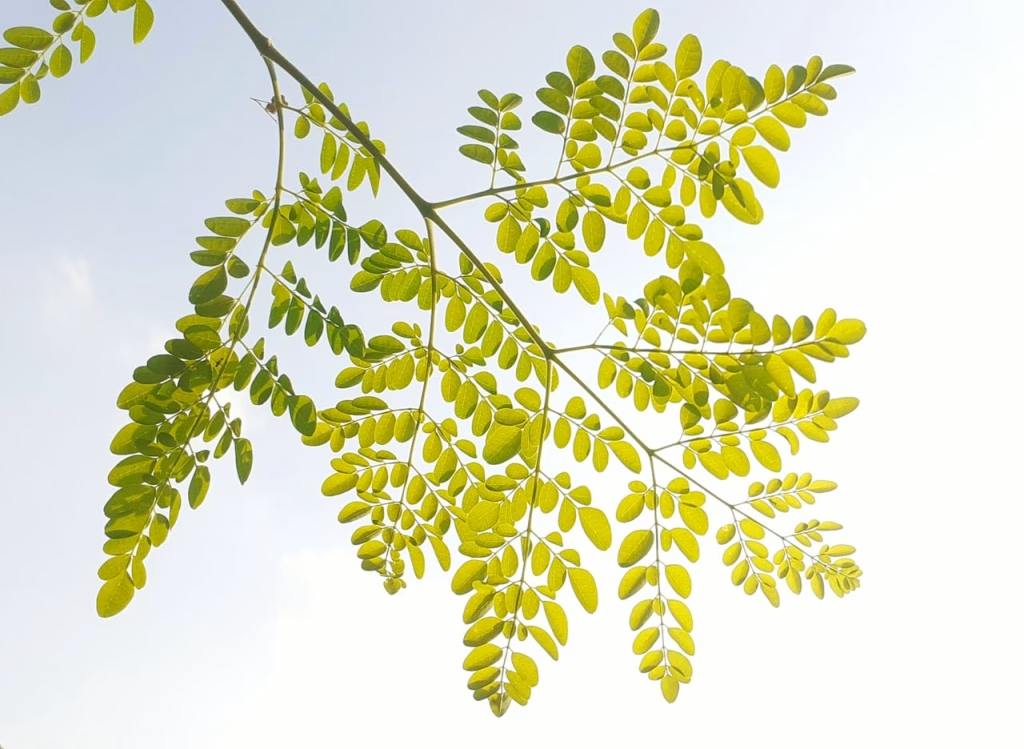
The Moringa tree, scientifically known as Moringa oleifera, is a fast-growing, drought-resistant tree widely cultivated in tropical and subtropical regions, including Africa, Asia, and South America. Due to its wide range of nutritional and medicinal properties, in some cultures it is called the “miracle tree.”
The moringa tree is known for its medicinal properties and is traditionally used to treat various conditions, such as diabetes, hypertension, inflammation, and infections. It contains bioactive compounds, including antioxidants, flavonoids, and phenolic acids, contributing to its health benefits.
Moringa can be used as a suplement, but it can aslo can be eaten. preaty much all of the moringa tree can be consumed in diferent ways:
- Moringa Leaves: Consumed fresh, dried, or powdered; used in soups, salads, supplements and tea.
- Moringa Seeds: Used for oil and water purification.
- Moringa Pods: known as “drumsticks” and are consumed as vegetables
- Moringa Flowers are used in traditional medicine and as food in some cultures.
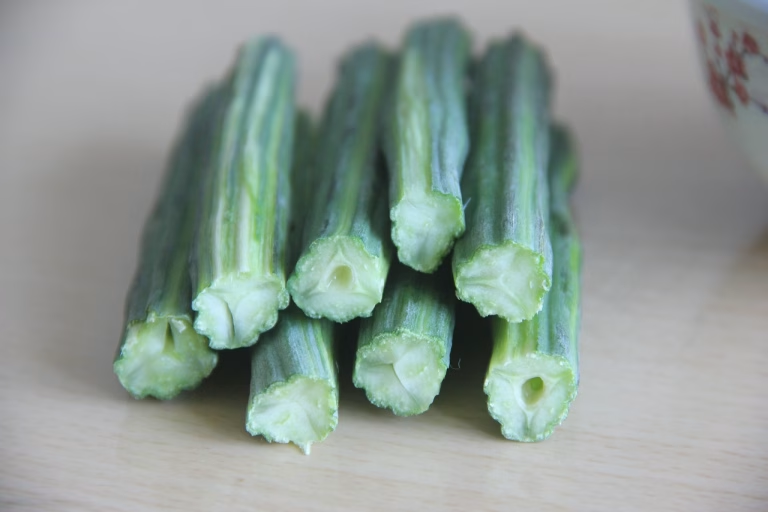
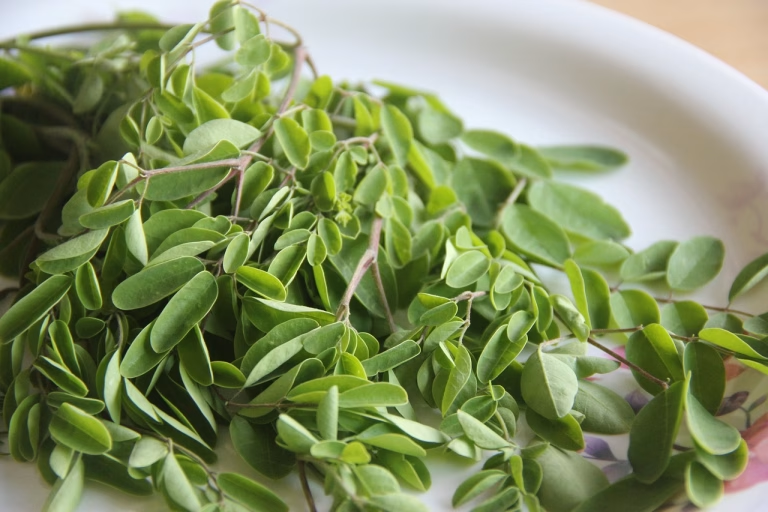
Moringa’s Nutritional Profile
Nutritional Value: The leaves, seeds, flowers, and pods of the Moringa tree are highly nutritious. The leaves, in particular, are rich in proteins, vitamins A, B, C, D, E, and K, as well as essential minerals like calcium, potassium, and iron. Most commonly, moringa leaves are used as supplements.
Moringa leaves have more Vitamin A than carrots, more Vitamin C than oranges, more Potassium than bananas and more Iron than Spinach!
Here’s a table summarizing the nutrients found in moringa, along with their typical amounts per 100 grams of dried moringa leaf powder. I’ve highlighted the nutrients that make moringa especially high in nutrients.
Nutritional Profile (Per 100g)
Calories: 300 kcal
Protein: 27 g ⭐ High
Carbohydrates: 38 g
- Fiber: 24 g ⭐ High
Fat: 6 g
Other Compounds
- Flavonoids: 1,200 mg ⭐ High
- Chlorophyll: 1,575 mg ⭐ High
- Polyphenols: 1,580 mg ⭐ High
Vitamins
- Vitamin A (Beta-Carotene): 16,300 IU ⭐ Very High
- Vitamin B1 (Thiamine): 0.3 mg
- Vitamin B2 (Riboflavin): 2.1 mg ⭐ High
- Vitamin B3 (Niacin): 8.2 mg
- Vitamin B6 (Pyridoxine): 1.2 mg
- Vitamin B9 (Folate): 40 µg
- Vitamin C (Ascorbic Acid): 17.3 mg
- Vitamin E: 76 mg ⭐ Very High
- Vitamin K: 738 µg ⭐ Very High
Minerals
- Calcium: 2,000 mg
- Iron: 28 mg ⭐ Very High
- Magnesium: 368 mg ⭐ High
- Potassium: 1,324 mg ⭐ High
- Phosphorus: 204 mg
- Zinc: 3 mg
- Copper: 0.6 mg
- Manganese: 5.8 mg
- Selenium: 8.5 µg
- Sodium: 70 mg
Amino Acids
- Histidine: 0.9 g
- Isoleucine: 1.2 g
- Leucine: 1.9 g
- Lysine: 1.5 g
- Methionine: 0.5 g
- Phenylalanine: 1.4 g
- Threonine: 1.2 g
- Tryptophan: 0.4 g
- Valine: 1.3 g
Overall, moringa is a very nutritious plant
- Protein: Moringa is a complete plant-based protein source (maybe we will see moringa protein powders soon?).
- Fiber: High fibre
- Vitamins A, E, and K: Exceptionally high levels, supporting vision, immune function, skin health, and blood clotting.
- Calcium, Iron, and Magnesium: High levels support bone health, oxygen transport, and muscle function.
- Antioxidants: Rich in flavonoids and polyphenols, which help combat oxidative stress.
benefits of Moringa for women during perimenopause

Moringa has been used in traditional medicine for a very long time, but in the Western world, it has gained popularity just in recent years. Therefore, there are not too many human studies, especially on women, to support all the claims. I’ll break down how moringa could be beneficial for women over 40 according to current studies.
Moringa leaves contain bioactive flavonoids, including isoflavones and coumestans, which act as phytoestrogens and can increase estrogen levels based on an animal study.
In this experiment, rats given moringa leaf juice for 25 days showed way higher estradiol levels than the control group. Estradiol levels increased from about 243 in the control group to around 524 in the moringa group, more than doubling. While we know that animal studies cannot be directly applied to humans, the findings suggest that the phytoestrogen compounds in moringa may influence hormonal pathways (1). I hope to see human studies looking into it, as it is especially interesting in the context of aging in women.
After the age of 40, estrogen levels gradually decline, contributing to reduced collagen production, slower skin repair, and changes in bone density as well as metabolism. Foods that contain phytoestrogen compounds, like moringa leaves, are being studied for their potential to interact with estrogen receptors and possibly help support some of the symptoms of perimenopause.
Additionally, moringa leaves are rich in isoflavones and calcium, which may help address osteoporosis, so important to us women as we age (2).
Another animal study demonstrated that moringa’s antioxidant and anti-inflammatory effects also contribute to protecting ovarian function and reducing oxidative stress (3).
While direct clinical evidence on moringa’s effects specifically in perimenopausal women is limited, plant supplements with anti-inflammatory effects have been shown to improve perimenopause symptoms such as hot flushes, sleep troubles, anxiety, and psychological struggles.
Morning leave may also support brain and kidney health, help regulate blood sugar by improving insulin activity and blood glucose, and help with healthy blood pressure.(4)(5)
As moringa is so nutritious, it can also be used as a great source of vitamins and nutrients. Due to changing cycles in perimenopause, low iron stores or even anemia are fairly common. Moringa is a great source of iron and vitamin C, which enhances absorption (6).
To Conclude:
Moringa is a versatile and valuable plant, both nutritionally and medicinally, and can be very beneficial for women over 40.
I have created a list of the best moringa supplements you can check out here, if you want to add it to your diet.
If you love natural ways of enhancing your health, try incorporating moringa oil as a supplement, tea, or beauty oil.
Have you tried any moringa products? Comment below your experience.
If you love learning about superfoods, read:
Health Disclaimer: This post is for informational purposes only and is not medical advice. Always consult a qualified healthcare professional before making changes to your supplements, medications, or treatment plan, particularly during perimenopause or if you have an existing health condition.
References
- Primiani, C., Pujiati, P., Prayitno, T., Setiawan, M., & Rivera, A. (2025). Profile of flavonoid bioactive compounds in moringa leaves (Moringa oleifera) as phytoestrogens. Edubiotik : Jurnal Pendidikan, Biologi dan Terapan. https://doi.org/10.33503/ebio.v10i01.1446.
- Sanubari, T., & Nugroho, K. (2018). Daun Kelor sebagai Sumber Isoflavon Alternatif bagi Perempuan Post Menopause : Studi Pendahuluan. .
- Soliman, S., Suliman, A., Fathy, K., & Sedik, A. (2025). Ovario- protective effect of Moringa oleifera leaf extract against cyclophosphamide-induced oxidative ovarian damage and reproductive dysfunction in female rats. Scientific Reports, 15. https://doi.org/10.1038/s41598-024-82921-7.
- Mohamed Ahmed Hassan, Tao Xu, Yang Tian, Yongheng Zhong, Fatma Abo Zakaib Ali, Xuan Yang, Baiyi Lu, Health benefits and phenolic compounds of Moringa oleifera leaves: A comprehensive review, Phytomedicine, Volume 93, 2021, 153771, ISSN 0944-7113,
https://doi.org/10.1016/j.phymed.2021.153771. - Pareek, A., Pant, M., Gupta, M., Kashania, P., Ratan, Y., Jain, V., Pareek, A., & Chuturgoon, A. (2023). Moringa oleifera: An Updated Comprehensive Review of Its Pharmacological Activities, Ethnomedicinal, Phytopharmaceutical Formulation, Clinical, Phytochemical, and Toxicological Aspects. International Journal of Molecular Sciences, 24. https://doi.org/10.3390/ijms24032098.
- Arora, S., & Arora, S. (2021). Nutritional significance and therapeutic potential of Moringa oleifera: The wonder plant.. Journal of food biochemistry, e13933 . https://doi.org/10.1111/jfbc.13933.

Silvija Meilunaite, PN1-NC, CSMC, is a certified nutrition coach and menopause coaching specialist writing from personal experience of perimenopause. She covers midlife health, hormone-supportive nutrition, and non-toxic living with a research-driven approach, helping women over 40 feel informed, strong, and healthy.