I am a barefoot shoes convert, and I don’t think I can go back to wearing regular shoes where my feet are cramped and start hurting after a while. If you are considering getting a pair of barefoot shoes but are not sure if they are good for you, this article will break it all down for you.
What are barefoot shoes?
Barefoot shoes are a middle ground between barefoot walking and modern shoes, designed to feel like walking barefoot while providing some protection. They allow the feet to move naturally, improving foot mechanics and strengthening the muscles in the feet and lower legs (3).
How are Barefoot shoes different? Here are some main characteristics:
- Minimalist Design: Barefoot shoes have a lightweight design with minimal cushioning and support.
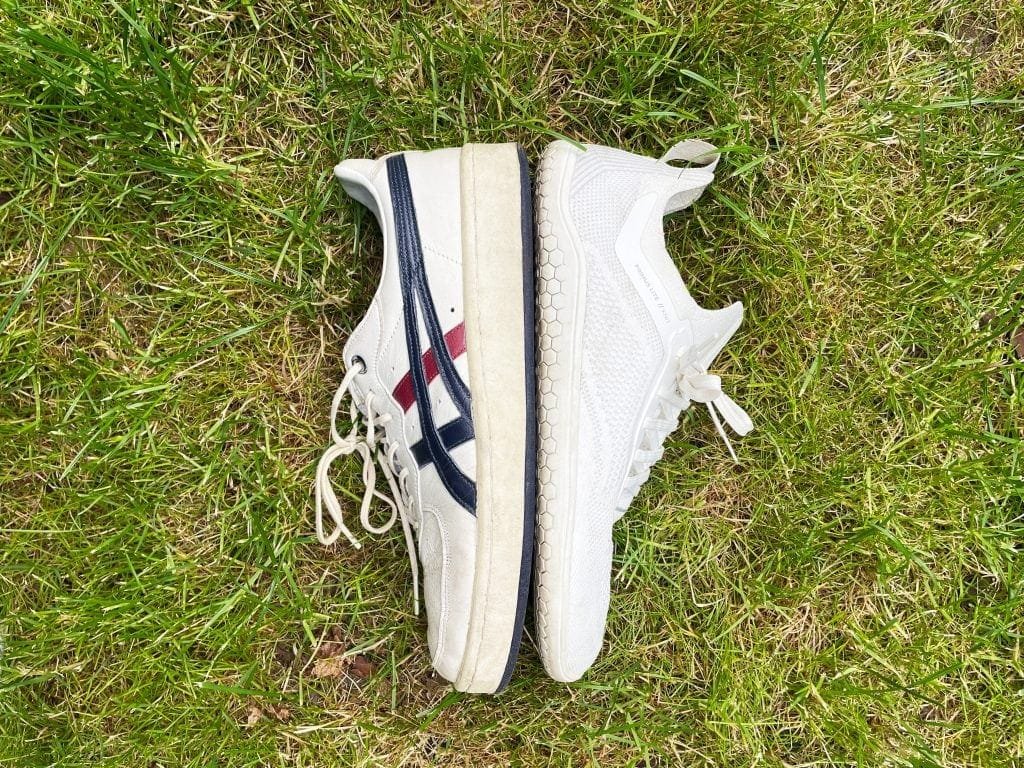
- Thin, Flexible Soles: The soles are typically very thin (starting from 2mm) and flexible, allowing the foot to bend and flex naturally.
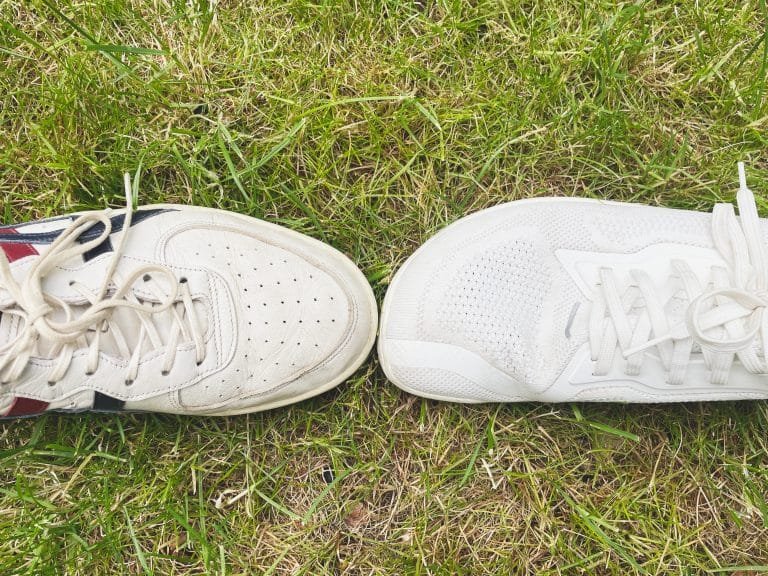
- Wide Toe Box: Barefoot shoes feature a wide toe box, providing a lot of space for the toes to splay and move naturally.
- Zero Drop: Most barefoot shoes have a zero drop, meaning there is no height difference between the heel and the forefoot.
- Low Heel and Arch Support: Barefoot shoes have no heel elevation or arch support, encouraging the foot muscles to work harder and become stronger. Although some barefoot shoes that are designed for fitness might have a bit more support than day-to-day shoes.
- Foot Mimicking Design: shoes’ overall shape mimics the foot’s natural shape, providing a more anatomically correct fit.
- Lightweight and Breathable Materials, which help keep the feet cool and comfortable. Many barefoot shoes for training are made from knitted, sock-like fabric, but there are many different variations of fabric for day-to-day shoes- from leather and faux leather to more water-resistant fabrics.
Why are bareboot shoes good for you?
Barefoot shoes offer health benefits for your feet and overall health. Here are some reasons why barefoot shoes are good for you:
- Natural Foot Movement: Barefoot shoes allow your feet to move more naturally than traditional shoes. Their thin soles have no arch support or cushioning, encouraging your feet to work their muscles more.
- Improved Foot Strength: Natural foot movement in barefoot shoes strengthens the muscles in your feet and also your lower legs. This increased muscle activity can lead to stronger, more resilient feet. (1)
- Better Balance: The thin soles of barefoot shoes enhance your ability to feel the ground beneath your feet. This can help you maintain better balance and coordination.
- Enhanced Natural Pase: Barefoot shoes promote a more natural pace, often encouraging a midfoot or forefoot strike rather than a heel strike. This can reduce the impact on your joints, potentially lowering the risk of injury.
- Improved Posture: Barefoot shoes allow your feet to function more naturally, helping improve your overall posture. Better foot alignment can impact your entire body.
- Reduced Foot Deformations: Traditional shoes with narrow toe boxes or high heels can deform your feet, causing bunions or hammertoes. Good barefoot shoes have wide-toe boxes, so your toes can splay naturally without cramming.
- Increased Awareness of Foot Health: Wearing barefoot shoes will make you more conscious of your foot health as you become more aware of how your feet feel and move. When I wear barefoot shoes, I catch myself wiggling my toes and massaging my feet on stones and curbs.
- Reduced Injuries: Some studies have shown that barefoot running leads to fewer muscle and bone injuries, but the overall injury rate is similar because barefoot runners tend to run fewer miles. Therefore, we need more studies (2).
It is good to research some experts in the field for a more in-depth explanation about the benefits of barefoot shoes. I have learned a lot from this short YouTube video: ‘What are the best shoes that promote foot health?’ with Peter Attia and Courtney Conley.
Are barefoot shoes bad for you?
While barefoot shoes have many potential benefits, they may only suit some. Here are some reasons why barefoot shoes might not be ideal for you:
1. Lack of Support:
Barefoot shoes provide minimal support, which can be problematic for people with flat feet or other foot conditions that require additional support. Having painful bunions myself, I’ve experienced a significant improvement by wearing barefoot shoes. However, everyone is different, so please keep this in mind and take it slowly if you feel uncomfortable at the beginning.
2. Unsuitable for Certain Surfaces:
Barefoot shoes offer little protection from sharp objects, rough terrain, or hard surfaces. However, you can choose more specialised barefoot shoes with a thicker sole and more protection. I love barefoot sandals; they are the most comfortable footwear I have ever had. However, walking on very run-down pavement on my trip in Thailand, I had a very painful experience, smashing my toe. As barefoot sandals are very flexible, the damage was way more than would have been with barefoot shoes or thicker sandals. So the lesson here is, pick your barefoot shoe for the occasion.
3. Not Ideal for All Activities:
Barefoot shoes may not provide adequate cushioning and protection for high-impact activities or sports that require additional support and shock absorption. They might also be unsuitable if you work a standing job and spend 8 hours on your feet on a hard surface.
4. Cold Weather:
Barefoot shoes offer minimal insulation, which can be uncomfortable in cold weather conditions. So, if you live in colder climates, make sure you choose barefoot shoes with sufficient insulation. I wear Vivobarefoot Tracker Boots in winter, when temperatures reach below -15, and was surprised how comfortable my feet are so close to snow.
Check out some great options for colder weather here: The best barefoot boots you can buy this Winter
Easing into wearing barefoot shoes daily:
1. Transition Gradually: You should transition to barefoot shoes slowly to allow your feet and muscles to adapt. Start with short walks and slowly increase the duration and intensity. I bought barefoot shoes a month ago and love going for walks and wearing barefoot shoes in the gym for low, and medium-intensity workouts. However, I still go for my 6 km runs in more cushioned shoes and hope to transition slowly.
2. Don’t overuse: Wear barefoot shoes on appropriate surfaces and for suitable activities. They are best for natural surfaces like grass, dirt, or sand. If you work on a hard surface, wear barefoot shoes for half a day and then swap to something with a bit more height in the sole.
3. Listen to Your Body: Stop using barefoot shoes if you experience persistent pain or discomfort.
4. Maximize the benefits: Wear separate toe socks for even better toe movement. Use toe spreaders, massage your feet, and train your feet regularly for the best benefits.
5. Consult a Professional: If you have any preexisting foot conditions, consult a healthcare professional before switching to barefoot shoes.
How To Pick Barefoot Shoes, And How Should They Fit?
Personal preference and specific needs should guide your choice, as many barefoot shoes are available. Consider whether you want them for day-to-day use or for exercise, and choose accordingly.
Let’s be honest. No matter how functional the shoe is, if we don’t like the look of it, we will not wear it, so take your time and look at different brands and models.
Like all shoes, you want to ensure barefoot shoes fit correctly, and most of the time, the recommendation is to size up. At the same time, you don’t want the shoes to be too big, especially if you are using them for sports, to ensure you have at least a bit of protection and support.
Barefoot shoes are wider than regular shoes, so if you have very narrow feet, choose a model that can be adjusted and ensure your foot doesn’t slide inside the shoe.
Some sites, like Vivobarefoot, have a very useful foot scanner and recommendations. I would recommend using individual brand and model recommendations to choose the right size for you.
If you are interested in finding out more about Vivobarefoot shoes, read: I WORE VIVOBAREFOOT SHOES, HERE IS MY HONEST REVIEW
Why Are Barefoot Shoes So Expensive?
I see this question popping up frequently, and here are the answers:
1. Function: Barefoot shoes are functional ergonomic shoes that require extensive expertise and testing, which costs a lot of time and money.
2. Design: Because they are so minimalistic, designing them is much more difficult. The sole needs to be thin enough for your feet to feel close to the ground, but it also needs to protect your feet.
3. Materials: not every material would last long when so thin. Barefoot shoes feel like socks but need to last a long time for day-to-day use. Materials need to be produced and treated to withstand training and outside conditions.
I think of barefoot shoes more as an investment in my long-term health rather than a fashion statement that looks good but does not necessarily provide health benefits. So, if you are thinking of getting a pair of barefoot shoes, I recommend shopping at known brands like Vivo Barefoot Xero shoes.
If this article helped you decide if barefoot shoes would be good for you, read the article about my experience having the first Vivo barefoot shoes, where I share my personal experience with barefoot shoes, what I like about them, and what I think could be improved.
Please note: This post is for informational purposes only and is based on research. It’s not medical advice. If you have health concerns, it’s always best to consult with a healthcare professional. Enjoy reading!
- Franklin, S., Li, F., & Grey, M. (2018). Modifications in lower leg muscle activation when walking barefoot or in minimalist shoes across different age groups. Gait & posture, 60, 1-5. https://doi.org/10.1016/j.gaitpost.2017.10.027.
- Altman, A., & Davis, I. (2015). Prospective comparison of running injuries between shod and barefoot runners. British Journal of Sports Medicine, 50, 476 – 480. https://doi.org/10.1136/bjsports-2014-094482.
- Franklin, S., Li, F., & Grey, M. (2018). Modifications in lower leg muscle activation when walking barefoot or in minimalist shoes across different age-groups.. Gait & posture, 60, 1-5 . https://doi.org/10.1016/j.gaitpost.2017.10.027.

Silvija Meilunaite, PN1-NC, CSMC, is a certified nutrition coach and menopause coaching specialist. Combining current scientific research with her own experience of perimenopause, she writes evidence-based articles, practical guides, and in-depth product reviews to help women over 40 make informed decisions about nutrition, strength training, recovery, supplements, non-toxic living, and wellness products.