
I am a 42-year-old woman on a pescatarian diet who exercises 5 to 6 times a week, and I take creatine almost every day. More women are discovering the benefits of creatine, and it’s time to debunk the myths surrounding this powerful supplement.
In this article, I will be breaking down the science of why creatine is essential for women’s health, especially over 40, from fitness, cognitive, and bone health perspectives. I will be addressing myths surrounding it and answering all the questions regarding creatine for women over 40.
Written by Silvija Meilunaite, Certified Menopause Coaching Specialist (CSMC) and Precision Nutrition (PN1-NC) Coach.
TL;DR
Creatine is one of the most researched supplements, and it supports more than just muscle growth and maintenance – it can also benefit brain and bone health. It may be especially helpful for women as we age, since women typically have lower creatine stores than men.
What is Creatine?
Creatine is a natural compound that can be found in muscle cells. It produces energy and is crucial for many physiological processes. (5)
Creatine helps regenerate adenosine triphosphate (ATP), the body’s primary energy source. During intense activities like sprinting or weightlifting, ATP is rapidly depleted. Creatine replenishes it, maintaining your performance.
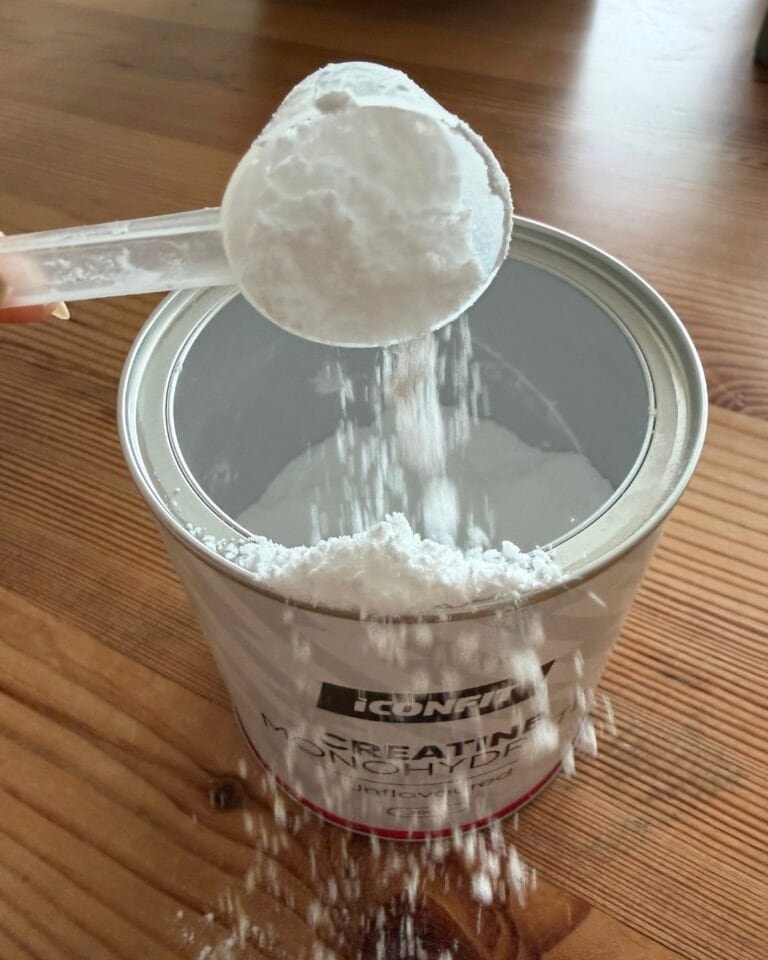
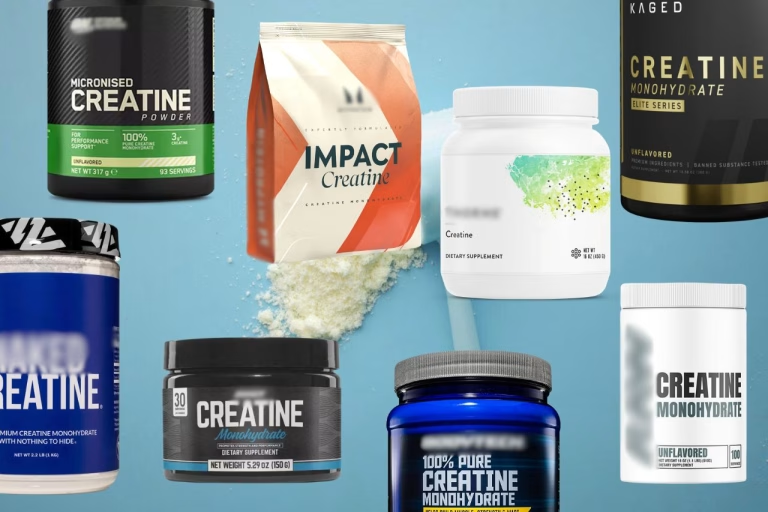
The most commonly used creatine is creatine monohydrate, the most studied, proven, affordable, and safe. Creatine monohydrate is highly bioavailable, meaning it is efficiently absorbed and utilized by the body. Micronized creatine monohydrate is easier to dissolve in water and digest.
Our bodies produce creatine naturally, and we can get it from food. You can only get creatine from animal food sources like meat, poultry, fish, seafood, and cow’s milk. If you are on a plant-based diet, over 40, or both, you should consider supplementing, and I will explain why.
Creatine for Women Over 40 is essential; here’s why:
As we age, we experience a natural decline in muscle mass, bone density, and cognitive function.
Creatine supplementation is more critical for women, as they have 70–80% lower endogenous creatine stores than men. (1)
In addition to this, hormonal changes during peri- and menopause affect creatine metabolism, making supplementation potentially more important when we age.(1)
This is how creatine can help with:
Muscle Health:
Age-related muscle loss ( sarcopenia) can lead to weakness and reduced mobility. Creatine supplementation supports muscle repair and growth; therefore, it is excellent for maintaining strength and functionality (6). However, one thing to remember is that you still need to hit the gym to grow or maintain your muscle; just taking creatine will not help.
Energy and Endurance:
Creatine replenishes energy stores, helping us feel energized throughout the day and perform better during workouts or daily activities. It also helps muscle recovery post-exercise. (3)
Bone Health:
When combined with resistance training, creatine may improve bone density, reducing the risk of fractures and osteoporosis (2)
Cognitive Benefits:
Not only do muscles use creatine for energy, but so does our brain. Creatine supplementation can enhance memory, focus, and mental clarity, especially as cognitive function declines with age. Creatine has also been shown to improve our mood. (1) Supplementing with creatine can prevent or delay neurodegenerative diseases associated with aging, including Parkinson’s, Alzheimer’s, and Huntington’s (13).
Can you get enough creatine without supplementing?
Some animal-based foods contain creatine, and if you eat a lot of meat and fish and don’t exercise too much, you might not need to supplement, but realistically, you need to eat a kilogram of meat and fish daily to hit 5g of creatine daily. Here are some approximate creatine amounts in meat and fish.
| Food | Approximate creatine content |
|---|---|
| Herring | 6–10 g per kg (2.7–4.5 g per lb) |
| Pork | 4–5 g per kg |
| Beef | 4–5 g per kg |
| Salmon | 4–5 g per kg |
| Tuna | 3–4 g per kg |
| Chicken | 3–4 g per kg |
I love eating herring and was surprised to see that I have the biggest amount of creatine per kilogram; however, I only eat maybe 200g of herring a week, so it is far off my daily creatine intake.
Cooking also reduces the amount of creatine in food, especially if it is cooked at high heat for a long time.
So to make sure you hit your daily recomendation on 5g per day of creatine, even if you are a regular meat and fish eater, I would still recommend supplementing.
Creatine and Plant-Based Diets
Although our bodies create creatine efficiently, you can also get it from food. Unfortunately, no plant-based foods have creatine, so you should supplement if you are an athlete, exercise, or want to help your body build creatine reserves while on a plant-based diet.
Studies show that due to smaller stores of creatine in muscles, vegetarians and vegans benefit more from supplementing creatine than omnivores. ( 4)
“Creatine supplementation increased lean tissue mass, type II fiber area, insulin-like growth factor-1, muscular strength, muscular endurance, Wingate mean power output, and brain function (memory and intelligence) in vegetarian participants.”(4)
Myths About Creatine Use for Women
Myth 1: Creatine Causes Bulky Muscles
Creatine helps muscles to recover and grow, but it does not make you bulky.
Myth 2: Creatine Causes Water Retention and Weight Gain
While creatine may cause water retention at the cellular level, it simply means that muscles are more hydrated and ready for performance. This is not the same as bloating or gaining fat.
Myth 3: Creatine is a Steroid
Creatine is not a steroid; it’s a naturally occurring compound. Decades of research confirm its safety when used within recommended doses. (9)
Myth 4: Creatine causes hair loss
I had a few women telling me that they don’t want to take creatine as it might cause hair loss. There is no evidence to show this.
A recent 12-week randomized controlled trial found no significant effect of creatine supplementation (5 g/day) on hair follicle health or dihydrotestosterone (DHT) levels, a hormone linked to hair loss, in healthy young males. This study showed no differences in hair density, follicular unit count, or cumulative hair thickness when supplementing with creatine compared to placebo (12).
My Personal Experience Taking Creatine as a 42-year-old active woman
Since I started taking creatine more than a year ago, I have definitely noticed some improvements in my physical and cognitive health.
If I exercise, I try to take creatine before the session or sip it in my water while exercising.
When lifting weights, I noticed I have more strength and can add a few more reps or lift 5% heavier weights.
On my cardio days, I noticed improvements as well. My runs run slightly longer, and I enjoy the run more if I have creatine. I seem to enjoy the runs more and go for an extra 10-15 minutes longer than usual.
I recently started incorporating creatine on my rest days as well, which helps me stay focused and my thoughts flow better.
I also have not noticed any side effects, but I always stick to a good quality creatine powder and don’t exceed 5g a day.
The only thing I noticed when taking creatine is that I do have to go to the toilet more often, but I think it is purely because I drink more water when I take it.
If I don’t get enough good-quality sleep, I take 10g of creatine in the morning, which helps me stay focused throughout the day. When I run out of it, I notice that I have less energy and struggle to focus. This became even more obvious as I hit perimenopause.
FAQ about creatine for women over 40
Is creatine vegan?
Creatine supplements, like creatine monohydrate, are manufactured synthetically in labs. They are made using sarcosine (a sodium salt) and cyanamide. This means that creatine is vegan, as no animal products are required to produce it.
Synthetic creatine is highly pure and free of contaminants. It is highly bioavailable and absorbs into muscles better than dietary creatine.
What is Creatine Dosage for Women Over 40?
A standard daily dose of 3–5 grams is sufficient for most women. Studies show no benefit of consuming more creatine for muscle maintenance.
Should women over 40 take creatine every day?
The short answer is YES. Take it during exercise days but also during rest days to help with creatine saturation in your mustles.
Do women over 40 need a loading phase?
You might have heard about the creatine loading phase. The creatine loading phase is a technique to quickly saturate muscle stores of creatine by consuming a high dose (20-25 grams daily, split into 5-gram doses) for 5–7 days. In General a loading phase is not necessary for women over 40 to experience the benefits of creatine supplementation. But if you are an athlete, focusing on muscle gain, it may accelerate initial gains. (7)
When is the best time to take Creatine?
If you are taking Creatine to improve brain function and focus, taking it in the morning is best. If you are taking it for muscle growth, take it one hour before or after your exercise. However, overall, daily consistency is more important than exact timing, as the key benefit of creatine comes from saturating your muscles with it over time. Drink plenty of water to stay hydrated while using creatine, as it draws water into muscle cells.
Who should not take creatine?
If you have pre-existing kidney conditions, are taking medications, or belong to a higher-risk group (e.g., pregnant women), consult your doctor before taking creatine. For most healthy adults, creatine is safe and well-tolerated when taken 3 to 5 g daily.
Can pregnant women take creatine?
Studies suggest that while creatine supplementation during pregnancy could offer potential benefits such as increased skeletal muscle, improved mood, and fetal neuroprotection, there is currently not enough empirical evidence and safety data to conclusively determine its safety for pregnant women. (10)(11). So you should consult your health provider if you are considering taking creatine whilst pregnant.
Conclusion: Embracing Creatine For Women over 40
Creatine greatly benefits women, particularly those over 40, by enhancing muscle, bone, and cognitive health. Combined with regular exercise, it can help you feel stronger and sharper for longer.
It is great that more and more women are talking about the benefits of creatine, especially as we age. It is definitely one supplement that I try to take daily, even if I don’t exercise.
Please Note: This post is for informational purposes only and is based on my research. It’s not medical advice. It’s always best to consult a healthcare professional with health concerns. Enjoy reading!
If you are looking for ways to improve your routine, read: What I Changed in My Routine as a 40-Year-Old Woman to Feel My Best
Research References
- Smith‐Ryan, A., Cabre, H., Eckerson, J., & Candow, D. (2021). Creatine Supplementation in Women’s Health: A Lifespan Perspective. Nutrients, 13. https://doi.org/10.3390/nu13030877.
- Candow, D., Forbes, S., Chilibeck, P., Cornish, S., Antonio, J., & Kreider, R. (2019). Effectiveness of Creatine Supplementation on Aging Muscle and Bone: Focus on Falls Prevention and Inflammation. Journal of Clinical Medicine, 8. https://doi.org/10.3390/jcm8040488.
- Kreider, R., Kalman, D., Antonio, J., Ziegenfuss, T., Wildman, R., Collins, R., Candow, D., Kleiner, S., Almada, A., & Lopez, H. (2017). International Society of Sports Nutrition position stand: safety and efficacy of creatine supplementation in exercise, sport, and medicine. Journal of the International Society of Sports Nutrition, 14. https://doi.org/10.1186/s12970-017-0173-z.
- Kaviani, M., Shaw, K., & Chilibeck, P. (2020). Benefits of Creatine Supplementation for Vegetarians Compared to Omnivorous Athletes: A Systematic Review. International Journal of Environmental Research and Public Health, 17. https://doi.org/10.3390/ijerph17093041.
- https://www.health.harvard.edu/exercise-and-fitness/what-is-creatine-potential-benefits-and-risks-of-this-popular-supplement
- Dolan, E., Artioli, G., Pereira, R., & Gualano, B. (2019). Muscular Atrophy and Sarcopenia in the Elderly: Is There a Role for Creatine Supplementation?. Biomolecules, 9. https://doi.org/10.3390/biom9110642.
- Antonio, J., Candow, D., Forbes, S., Gualano, B., Jagim, A., Kreider, R., Rawson, E., Smith‐Ryan, A., VanDusseldorp, T., Willoughby, D., & Ziegenfuss, T. (2021). Common questions and misconceptions about creatine supplementation: what does the scientific evidence really show?. Journal of the International Society of Sports Nutrition, 18. https://doi.org/10.1186/s12970-021-00412-w.
- Smith‐Ryan, A., Cabre, H., Eckerson, J., & Candow, D. (2021). Creatine Supplementation in Women’s Health: A Lifespan Perspective. Nutrients, 13. https://doi.org/10.3390/nu13030877.
- Dickinson, H., Ellery, S., Ireland, Z., LaRosa, D., Snow, R., & Walker, D. (2014). Creatine supplementation during pregnancy: summary of experimental studies suggesting a treatment to improve fetal and neonatal morbidity and reduce mortality in high-risk human pregnancy. BMC Pregnancy and Childbirth, 14, 150 – 150. https://doi.org/10.1186/1471-2393-14-150.
- Lak, M., Forbes, S., Ashtary-Larky, D., Dadkhahfar, S., Robati, R., Nezakati, F., Khajevandi, M., Naseri, S., Gerafiani, A., Haghighat, N., Antonio, J., & Tinsley, G. (2025). Does creatine cause hair loss? A 12-week randomized controlled trial. Journal of the International Society of Sports Nutrition, 22. https://doi.org/10.1080/15502783.2025.2495229.
- Smith, R., Agharkar, A., & Gonzales, E. (2014). A review of creatine supplementation in age-related diseases: more than a supplement for athletes. F1000Research, 3. https://doi.org/10.12688/f1000research.5218.1.

Silvija Meilunaite, PN1-NC, CSMC, is a certified nutrition coach and menopause coaching specialist. Combining current scientific research with her own experience of perimenopause, she writes evidence-based articles, practical guides, and in-depth product reviews to help women over 40 make informed decisions about nutrition, strength training, recovery, supplements, non-toxic living, and wellness products.