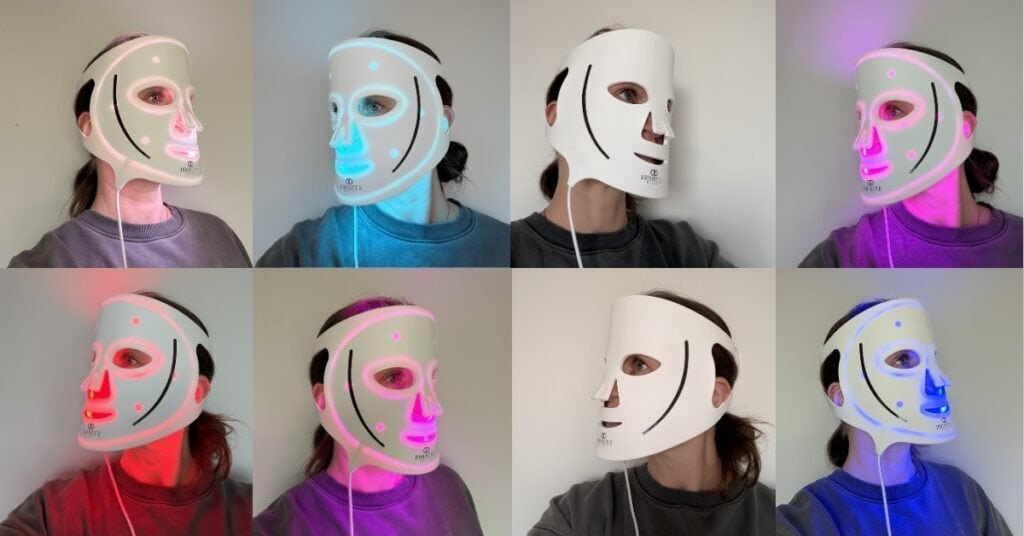
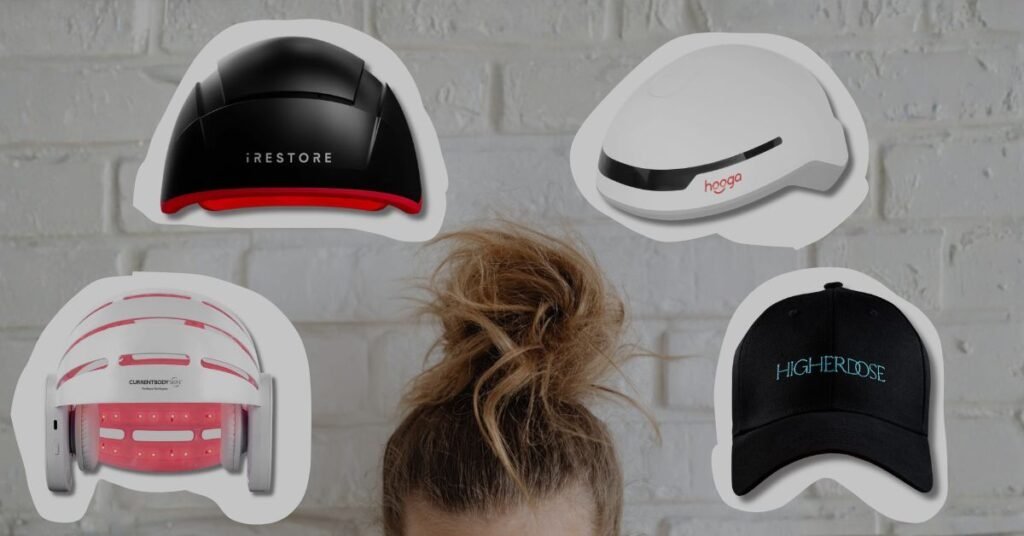
I use a red light therapy mask for my face and a panel for my body regularly, and I love the results. While researching, I came across many studies highlighting the benefits of Red Light Therapy for hair growth. Hair changes are common in your 40s, often driven by hormonal shifts, lower iron and ferritin, and changes in scalp health. Red light therapy is one of the few non-prescription treatments with real clinical evidence behind it for women in this age range.
Lately, I have been shedding a lot and was thinking of investing in a red light therapy helmet or a cap, but they are not cheap. I wanted to create this list to make it easier to make a decision before I splurge on one of the best hair growth devices. I will also be touching on what wavelengths you need to look for and if LED or laser lights are better.
Why trust this review? Here's how I research, test, and score every product.
TL;DR
- Best overall: iRESTORE Elite Hair Growth Helmet
- Best clinical evidence: HairMax Lumina 272 LaserCap
- Best multi-wavelength value: Qure Q-Renew LLLT Helmet
- Best LED option: CurrentBody LED Red Light Hair Growth Helmet
- Best budget overall: ViQure Hair Growth Helmet
LED vs laser: Does it actually matter for hair growth?
If you’ve been researching red light therapy for hair growth, you’ve probably seen claims that laser devices are significantly better than LED devices because lasers produce a more concentrated beam that penetrates deeper into the scalp.
But although it is true that the laser is more concentrated, there is no need for the light to go deeper; let me explain.
The hair follicle stem cells targeted by low-level light therapy sit quite close to the surface of the scalp, around 1-4 mm deep, which is already within the penetration range of RED LED light (1). Once light enters biological tissue, scattering rapidly reduces the coherence advantage of lasers, meaning laser light behaves much more like non-coherent light after a short distance in the skin (2).
Current research and meta-analyses show no clear advantage of laser-based devices over LED devices for hair growth (3). Both technologies appear capable of improving hair density and supporting hair regrowth in people with androgenetic alopecia.
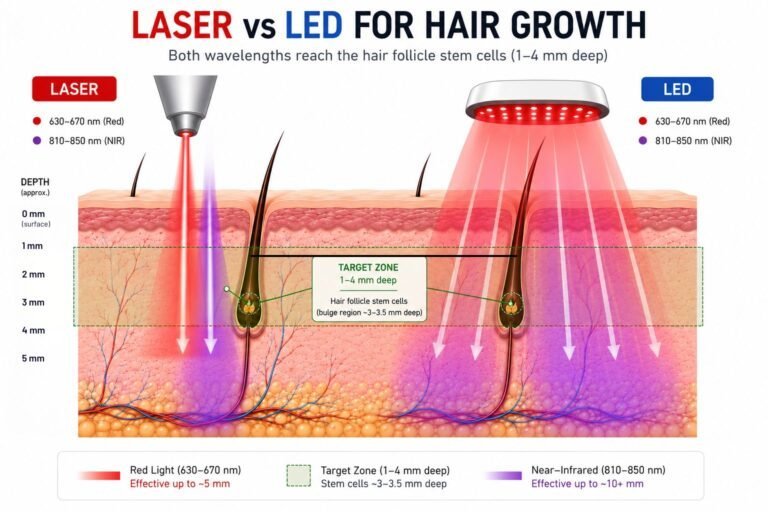
What matters more is:
- Wavelength (630-680nm is the studied range for hair)
- Energy dose and power density; most studies use 3-5 J/cm² per session
- Full scalp coverage instead of an area
- Treatment consistency (3-4 sessions per week for 16-26 weeks)
- FDA clearance and overall device quality
Some combination devices use both red and near-infrared wavelengths, which may offer broader tissue coverage. But that benefit comes from wavelength diversity rather than the inclusion of lasers specifically. Importantly, LED-only devices can also provide multiple wavelengths.
So when comparing hair growth devices, it’s probably not worth paying a premium for the word “laser” alone. A well-designed LED device may perform just as well as a more expensive laser helmet or cap.
In this article, you’ll see devices that use only LED light, only laser, and combinations of both. Laser or LED should not be the priority when picking a hair growth helmet or cap. Look at the wavelength, dose, scalp coverage, and FDA clearance instead – those are the specs that actually matter. The right device for you is the one you’ll actually use consistently for 16-26 weeks, not the one with the most impressive marketing.
With that in mind, here are the best red light therapy helmets and caps, broken down.
| Device | Wavelength | Diodes | Session | FDA Cleared | Price | Best For |
|---|---|---|---|---|---|---|
| iRESTORE Elite Helmet | 625 / 655 / 680nm | 500 (300 laser + 200 LED) | 12 min | Yes | $1,799 | Best overall |
| ViQure Laser Helmet Helmet | 650nm | 80 lasers | 30 min | Yes | $299 | Best budget helmet |
| CurrentBody LED Helmet Helmet | 620-660nm | 120 LEDs | 10 min | Yes | $794-859 | Best LED-only option |
| HairMax Lumina 272 Helmet | 650nm | 272 lasers | 7 min | Yes | $1,999 | Best clinical evidence |
| Qure Q-Renew Helmet | 655nm laser + 630/660/680nm LED | 370 (220 LEDs + 150 lasers) | 12 min | Yes | $999 | Best multi-wavelength value |
| Happy Head Advanced Helmet | 650nm | 204 lasers | 25-35 min | Yes | $998 | Dermatologist-developed |
| HairMax Powerflex 272 Cap | 655nm | 272 lasers | 7 min | Yes | $1,449 | Best cap with clinical data |
| Capillus Spectrum Cap | 650 + 808nm | 312 lasers | 6 min | Yes | $2,199 | Best multi-wavelength cap |
| Higher Dose Red Light Hat Cap | 650nm | 120 LEDs | 10 min | Yes | $449 | Best wellness-brand cap |
| Bon Charge Red Light Cap Cap | 650nm | 125 LEDs | 10 min | Yes | $337 | Best budget overall |
Disclosure: As an Amazon Associate, I earn from qualifying purchases. I may also earn from other affiliate links, at no extra cost to you. Thank you for supporting Barefoot Basil! Full Affiliate Disclosure
The Best Red Light Therapy Helmets
iRESTORE Elite Hair Growth Helmet
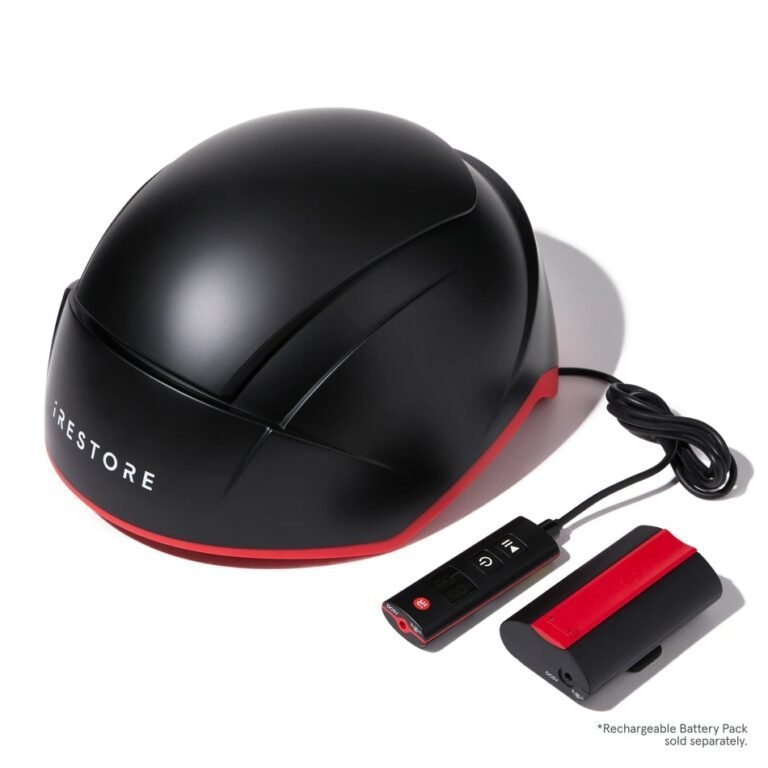
If you want the most powerful device on the market with diverse wavelengths as well as LED and laser diodes, the iRESTORE Elite Hair Growth Helmet is probably the best value for money you can get at the moment.
Wavelengths: 625 / 655 / 680nm
Diodes:500 (300 laser + 200 LED)
Laser Power Classification: Class 3R (<5mW)
Session time: 12 min
FDA cleared: Yes
Warranty: 3 Year
Weight: 1.20 lbs
Best technical specifications
Pros
+ multiple wavelength and diode types
+ 500 ( the most on the list) diodes cover the scalp evenly
Cons
– Padding covers some hair in the back
– Need to buy a battery separately for $99
ViQure Laser Hair Growth Helmet
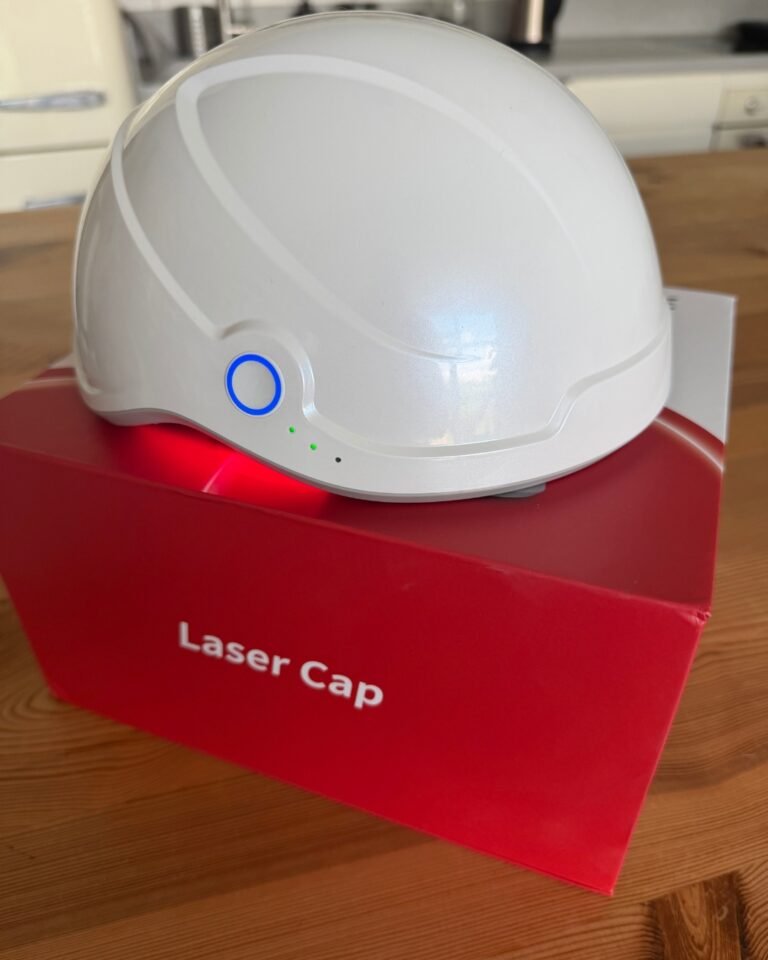
ViQure brand is known for its laser hair removal devices and is expanding into red light therapy for skin care and hair growth. I am testing out their hair growth helmet and love using it so far. It is very comfortable to wear, has all the science-proven specifications, and is the most affordable laser diode helmet on the market at the moment.
Wavelengths: 650nm
Diodes: 80 lasers
Irradiance: < 5mw/cm per light
Session time: 30 minutes
FDA cleared: Yes
Warranty: 5 Year
Weight: 1.41 lbs
Use barefoot15 for 15% OFF the ViQure Hair Growth Helmet.
A bit low on laser diodes, long session time, but a very good price
Pros
+ Very affordable, especially with a discount code
+ Comes with straps to keep the helmet in place
+ Very long warranty
Cons
– Session length is 30 minutes, the longest on this list
– Only 80 lasers, no LEDs
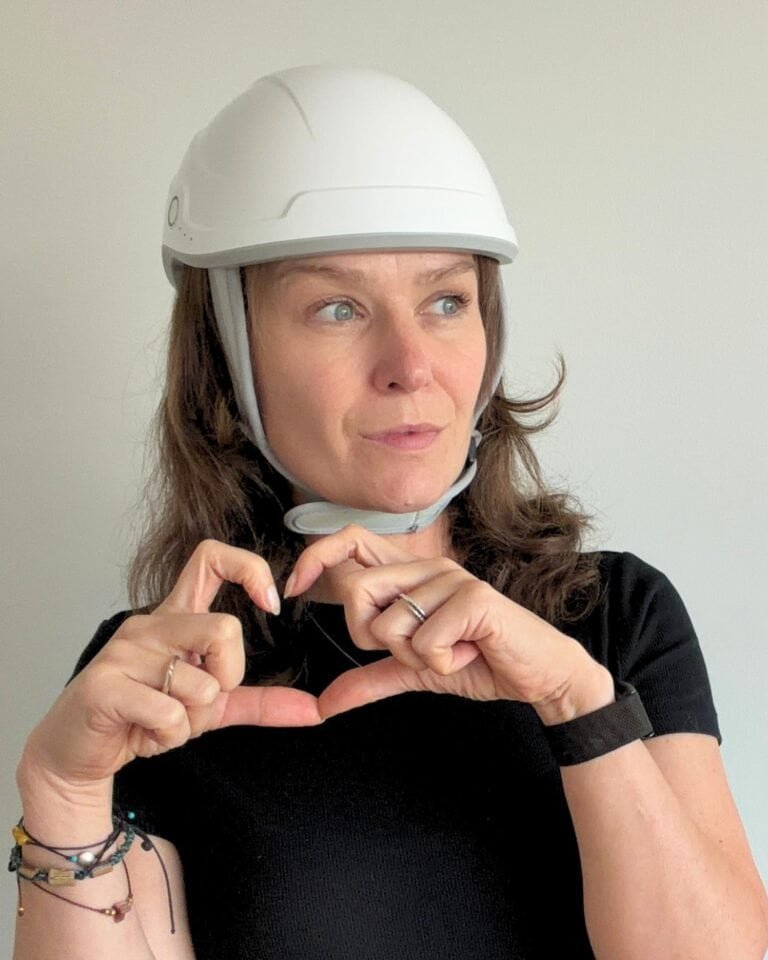
If you like the sound of this hair growth helmet, check out my full review here:
ViQure Hair Growth Helmet Review
CurrentBody LED Red Light Hair Growth Helmet
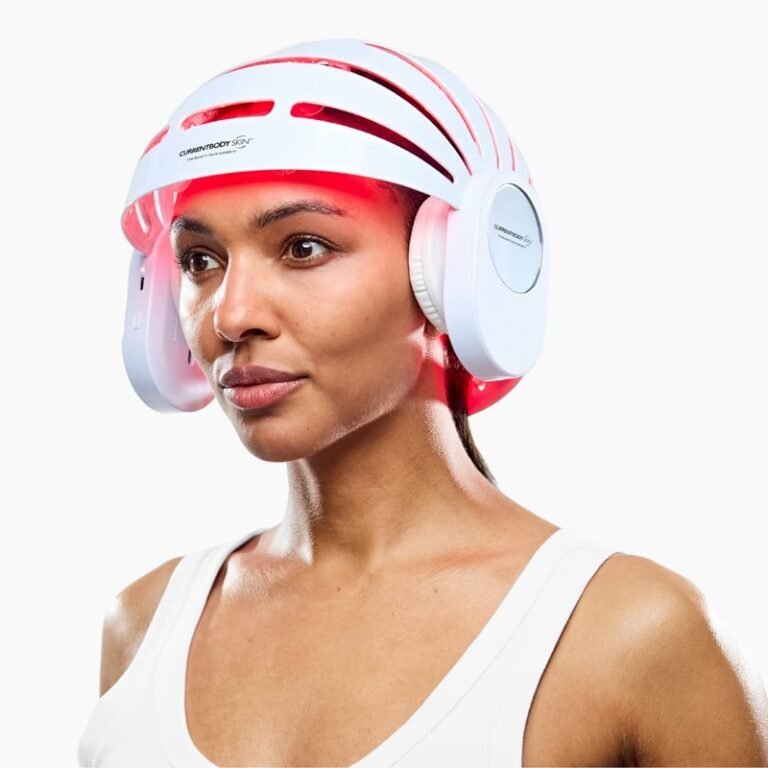
CurrentBody is one of the most respected red light therapy brands. They test their devices thoroughly and publish their own clinical trials and results.
Wavelengths: 620-660nm
Diodes: 120 LEDs (no lasers)
LED Irradiance: 30mw/cm2
Average Irradiance: < 5mw/cm2
Session time: 10 minutes
FDA cleared: Yes
Warranty: 2 Year
Weight: 3.3 lbs
A reputable brand and the product with proven results
Pros
+ Comes in two sizes, so you can find a perfect fit for you
+ Covers the whole head
Cons
– It is quite heavy compared to other helmets
Hairmax Lumina 272 LaserCap
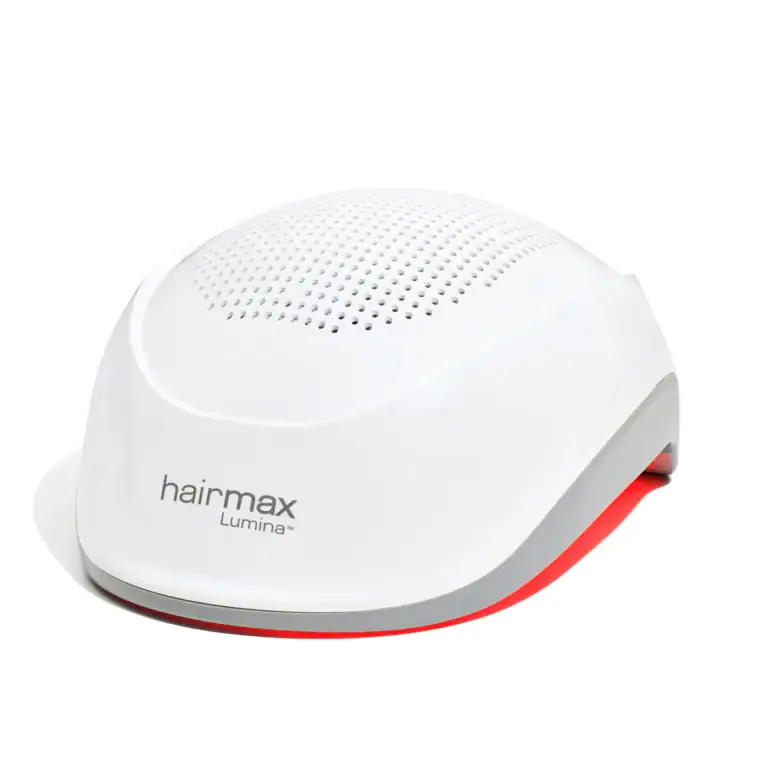
Hairmax is an established company that only focuses on hair growth with a focus on laser technology and hair care products.
Wavelengths: 650nm
Diodes: 272 laser
Session time: 7 minutes
FDA cleared: Yes
Warranty: 2 Year
Weight: 1.2 lbs
A reputable brand but quite pricey
Cons
– The shape makes it a bit difficult to move around in
– expensive for a one-wavelength laser device
Qure Q-Renew LLLT Helmet
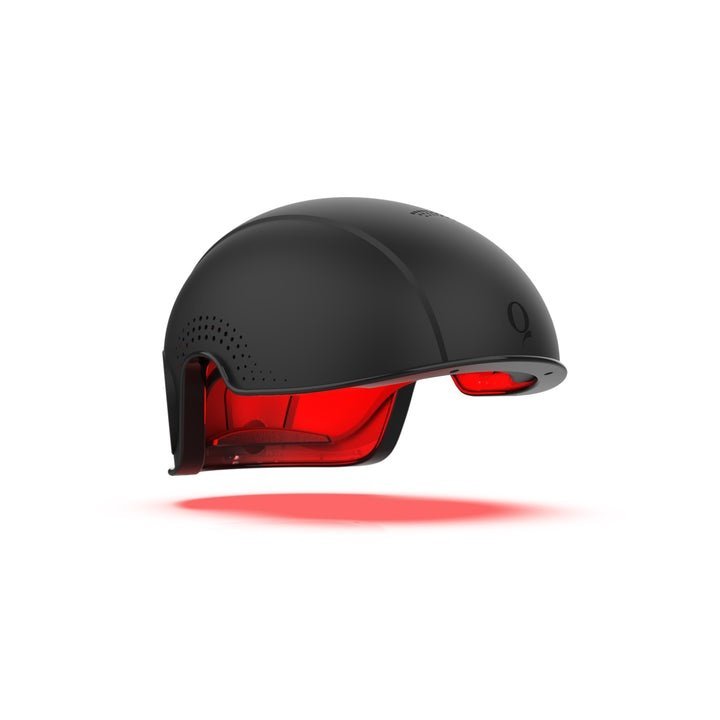
A really good option if the IRESTORE helmet is out of your budget. Qure Q-Renew LLLT Helmet is a very good value for what it offers
Wavelengths: 655nm laser + 630/660/680nm LED
Diodes: 370 (220 LEDs + 150 lasers)
Session time: 12 minutes
FDA cleared: Yes (K252414), and TGA, CE, UKCA
Warranty: 3 Year
Weight: 2.89 lbs
Great all-rounder LLLT Helmet
Pros
+ good amount of LED and laser diodes, and 3 wavelengths
+ Has zone targeting for more specific areas
+ stable design keeps it on the head
+ Has published clinical trials on the device specifically
Cons
– Slightly heavy
Happy Head Advanced Laser Helmet Hair Growth System
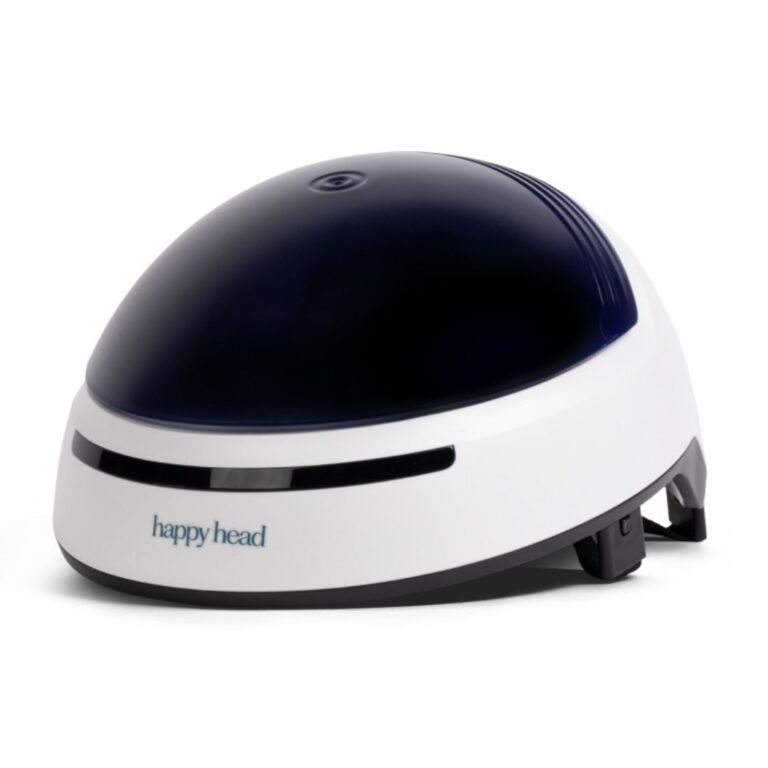
Happy Head is a 15-year-old company focusing on hair growth from supplements to topical solutions that offer personalised solutions. They have now launched a Laser helmet that you can use alongside their other products to optimise your hair growth. I like this futuristic-looking LLLT helmet; however, it only focuses on the top of the head and has quite long treatment times.
Wavelengths: 650nm
Diodes: 204 Lasers
Session time: 25-35 minutes
FDA cleared: Yes
Warranty: 1 Year
Weight: 1.41 lbs
Long treatment time and does not cover the full head
Pros
+ Has a strap to keep it secure on your head
Cons
– The flimsy chin strap can be a bit uncomfortable
– long treatment time compared to other helments on this list
Best Red Light Therapy Caps
If you don’t imagine yourself walking around with an LLLT Helmet but still want hair growth, you might want to look into the red light therapy caps.
They do fit your head more comfortably without sliding off, so you can go about your day while you are doing the treatment. And if you want to step outside in a cap, it also protects from the sun.
Same as with red light therapy helmets, I listed caps for different budgets and needs.
Hairmax 272 Powerflex Cap
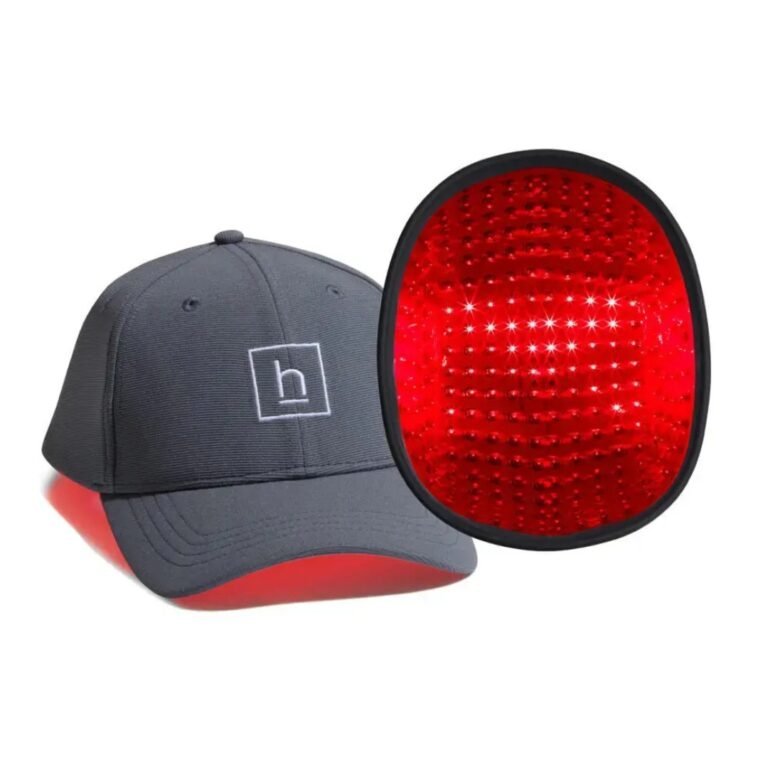
Another product by Hairmax has clinical studies backing it. A good number of lasers cover your head fully.
Wavelengths: 655 nm
Diodes: 272 Medical-Grade Lasers
Session time: 7 minutes
FDA cleared: Yes
Warranty: 2 Year
Weight: 2.2 lbs with battery pack
Good quality LLLT cap from a well-known brand
Pros
+ Most diodes in a cap on this list
+ A very discreet design
Cons
– Some Users complain about it stopping working
Capillus Spectrum Cap
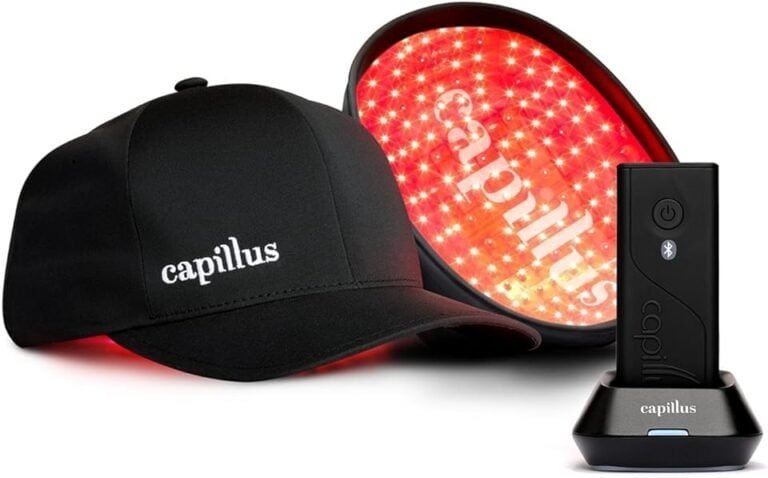
Capillus offers a great selection of caps to fit your budget and needs. From entry-level caps starting at $1149 to 3-wavelength premium LLLT caps at over $3000. This is a brand you can trust, but you do pay for it.
Wavelengths: 650 nm + 808 nm
Diodes: 312 lasers (272 Red Light + 40 Near-Infrared)
Session time: 6 minutes
FDA cleared: Yes
Warranty: 3 Year
Weight: 0.5 lbs
Quite expensive
Pros
+ Very short treatment time; however, the brand recommends using the cap daily rather than every other day
+ has an app where you can set reminders as well as track the progress
Cons
– High price
If you want a discreet daily-use red light cap and are on a budget, both Higher Dose and Bon Charge offer near-identical devices at slightly different price points. Higher Dose is a bit more established wellness-focused brand, and Bon Charge is for budget-conscious shoppers wanting the same form factor but for slightly less.
Higher Dose Red Light Hat
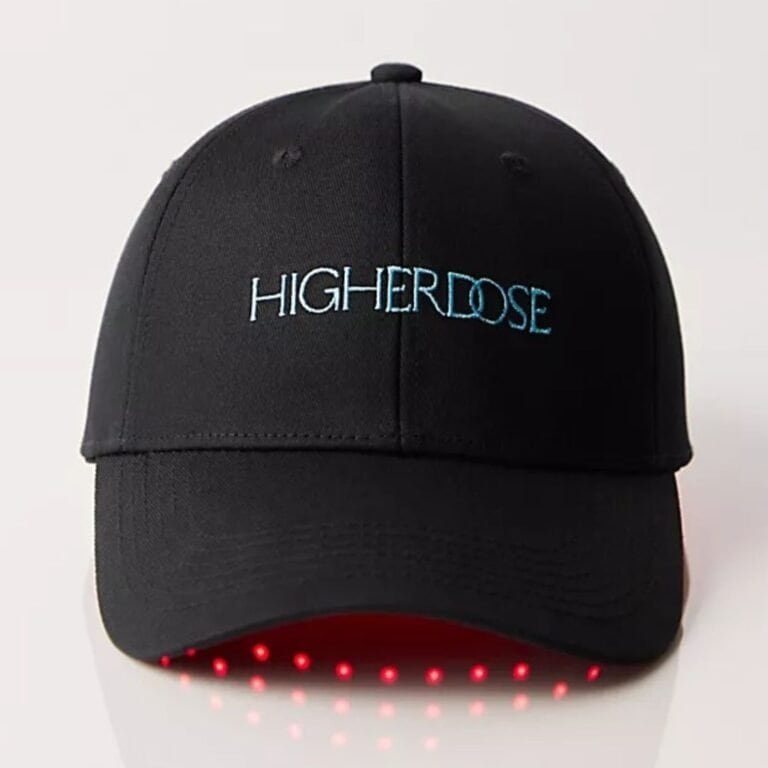
A discreet, well-built red light cap from a brand specialised in red light therapy. Best for readers who prefer a wellness-focused brand and don’t mind paying slightly more for the brand positioning.
Wavelengths: 650 nm
Diodes: 120 LED
Session time: 10 minutes
FDA cleared: Yes
Warranty: 1 Year
Weight: 1 lbs
Affordable solution
Pros
+ One of the most affordable devices on this list
Cons
– Lower diode count than laser caps at similar price points
– Single wavelength only
Bon Charge Red Light Cap
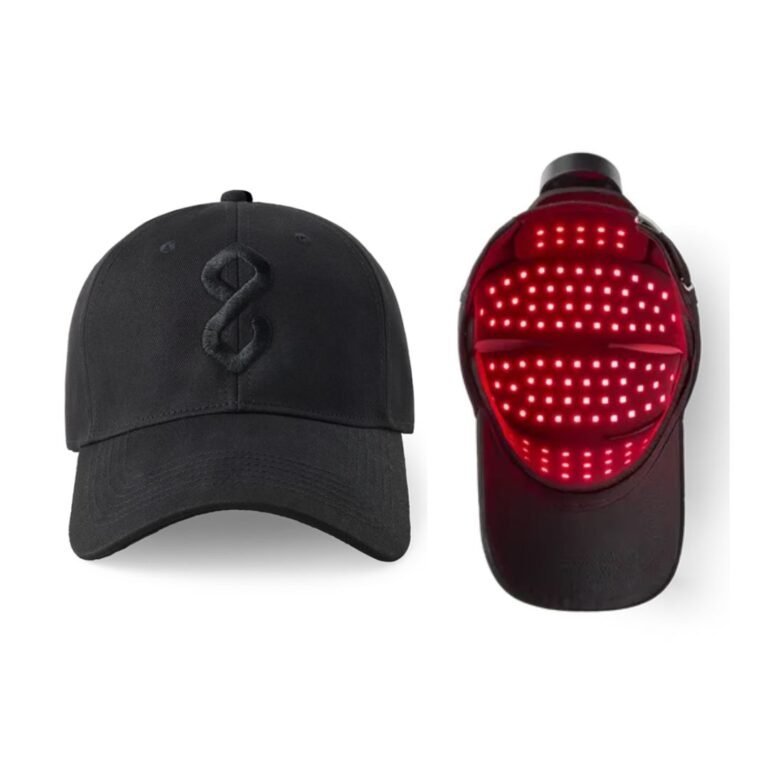
Almost identical to the Higher Dose cap at a lower price point. Best for budget-conscious shoppers who want the same form factor for less.
Wavelengths: 650 nm
Diodes: 125 LED
Session time: 10 minutes
FDA cleared: Yes
Warranty: 1 Year
Weight: 0,6 lbs
Good value for money
Pros
+ Most affordable hair growth device on this list
+ Very light
Cons
– The charger on the back could be more discreet
– Single wavelength only
Hormonal shifts often pull in two directions at once: thinning the hair on your scalp while bringing unwanted growth to the chin, lip, or jaw. If unwanted hair is bothering you, too, here’s my honest ViQure S-LD at-home hair removal device review.
What kind of devices do I not recommend?
If you are serious about hair growth and want to see results, it comes down to two things. The device has to be powerful and big enough to cover the entire scalp. And it has to have the proven wavelengths to help your hair grow. As much as I love the look of a red light therapy shower head or a red light massager, it would take way longer to see real results.
You would have to spend a long time moving the massager around your head to see the same results as with a helmet; the same comes for a shower head. Yes, it is nice to have, but realistically, it is way too far from your head to feel the difference. I also saw a hairband that is quite big but still only covers one-fourth of your hairline. So if you are thinking of getting one of these devices, I recommend getting a red light therapy panel instead and using it for your face, body, and hair. I list the best ones at the moment here: Best Red Light Therapy Panels: Top Picks of 2026 for Skin and Recovery
If you want to learn which red Light Therapy panel or Helmet is better for you, read my article:
Red Light Therapy for Hair Growth in Perimenopause: Panel vs LLLT Helmet,
and if you want a red light devise that covers all your body, including hair, check out my latest list of Best Red Light Therapy Mats And Blankets
Hair Loss Devices I haven’t included
Theradome PRO LH80
Theradome kept coming up while researching this article, and although it’s a good-quality, FDA-cleared option, I cannot justify paying almost $1000 for an LLLT helmet with just 80 lasers. Watching some promotional videos, it also looks like if you have a smaller head, it doesn’t stay in place, so you wouldn’t be able to move around without it falling off. For this price range, you can choose a better device from the list above.
Capillus TriSpectrum
The Capillus TriSpectrum has impressive specs on paper – 312 laser diodes across three wavelengths – and Capillus points to research on multi-wavelength LLLT devices to support the technology. Two studies are worth knowing about: a 2024 mouse study published in the Journal of Biophotonics (4) and a 2023 24-week human trial in the Indian Journal of Dermatology using a Korean triple-wavelength helmet (5). The human study showed significant increases in hair density and thickness, which is great, but it had no control group, was funded by the device manufacturer, and tested a device other than Capillus. Other multi-wavelength devices on this list (like the Qure Q-Renew and iRestore Elite) use comparable technology at half to a third of the price. At $3,299, you’re paying a premium, and I recommend the Capillus Spectrum Cap instead.
Hooga Red Light Therapy Laser Helmet
Hooga is known for very affordable prices. Although it was on this list as the best budget helmet, I have now replaced it with Viqure, as the price is much lower and it is FDA-cleared. I would still recommend it as an entry-level helmet, as it has approved wavelengths (650nm), 96 laser diodes, and Irradiance < 5mw/cm per light. So if you are a big fan of the brand , you can buy it here , for $499.
Found this review helpful?
Get more honest recommendations in your inbox.
Thank you!
You have successfully joined our subscriber list.
You Might Also Like:
FAQ
Are laser hair growth devices worth the money?
Laser devices are not significantly better than well-designed LED devices for hair growth, despite often costing two to three times more. What matters is wavelength, dose, coverage, and consistency – not whether the light source is LED or laser.
Do FDA-cleared hair growth devices actually work better?
FDA clearance is proof that you are getting what the brand is advertising, and the wavelength in your device is proven to help with hair loss. LLLT devices are not required to be FDA approved, and you can still buy a good-quality device from a reputable brand, but FDA clearance is an extra step of reassurance.
Can I trust Amazon-only hair growth helmets?
I would recommend buying only reputable brands that sell both on and off Amazon and have safety features.
How many diodes do I really need?
More diodes do not mean a better treatment, as too much exposure to red light therapy can do more harm than good. Yes, the number of diodes is important for head coverage, but the quality of the diodes and their proven wavelengths are more important.
How long does it take to see results from red light therapy for hair?
Red Light therapy for hair growth is a long process, and it takes around 16-26 weeks to start seeing the results.
Is HairMax better than iRestore?
Both brands are reputable in the red light therapy field, with both producing great products for hair loss. Check out the comparison table to see which product you prefer for your specific needs.
What’s the difference between a cap and a helmet for hair growth?
The main difference is that you can wear a hat in different settings and disguise that you are using the red light therapy treatment. A helmet is something you would probably use more in the house by yourself as a wellness treatment, as it might look a bit silly wearing it in public.
When choosing a device, try to imagine where you would use it the most.
To summarize,
Red Light therapy helmets and caps are not cheap, but they are a one-time investment; therefore, it is important to do the research and make sure you buy a device that is proven to work, and you are not overpaying for marketing.
LLLT devices can also be used with other hair treatments to get the best out of your investment. I believe the red light therapy can be very beneficial to hair growth, as long as your expectations are aligned with reality. Red light therapy, in general, is a long-term game and should be a part of your wellness routine in addition to other things, helping your hair growth, including things like nutrition and stress management.
I hope this list helps you choose a device that is perfect for you.
Editorial Note: This post is for informational purposes only. Product formulations can change; always check current ingredient labels before purchasing.
References
- Avci P, Gupta GK, Clark J, Wikonkal N, Hamblin MR. (2014). Low-level laser (light) therapy (LLLT) for treatment of hair loss. Lasers in Surgery and Medicine, 46(2), 144-151.
- Heiskanen V, Hamblin MR. (2018). Photobiomodulation: lasers vs. light emitting diodes? Photochemical & Photobiological Sciences, 17(8), 1003-1017.
- Gupta AK, Mays RR, Dotzert MS, Versteeg SG, Shear NH, Piguet V. (2017). Efficacy of non-surgical treatments for androgenetic alopecia: a systematic review and network meta-analysis. Journal of the European Academy of Dermatology and Venereology, 32(12), 2112-2125.
- Wikramanayake TC, et al. (2024). Effects of multi-wavelength low-level laser therapy on hair growth. Journal of Biophotonics. doi: 10.1002/jbio.202400523
- Kim JH, Son HS, Yu DA, Choe YB, Lee YW. (2023). Assessment of effects of low-level light therapy on scalp condition and hair growth. Indian Journal of Dermatology, 68(4), 487.

Silvija Meilunaite, PN1-NC, CSMC, is a certified nutrition coach and menopause coaching specialist. Combining current scientific research with her own experience of perimenopause, she writes evidence-based articles, practical guides, and in-depth product reviews to help women over 40 make informed decisions about nutrition, strength training, recovery, supplements, non-toxic living, and wellness products.