There are so many at-home skin care devices, and it can be overwhelming. I love using my Red Light Therapy mask, but other technologies are still very new to me. That’s why I was very excited when ViQure sent me its Firmea All-in-One Radio Frequency Skin Tightening Device to test. It combines bipolar radiofrequency with electrical muscle stimulation and includes separate face and body probes, so I can test both in one device instead of choosing one or the other.
I’ve been testing the device for over a month, mainly on my face, arms, core, and legs. In this review, I explain how the technology works, break down the research, how I used it, and what I noticed.
Why trust this review? Here's how I research, test, and score every product.
TL;DR
The ViQure Firmea feels like a powerful home device that combines 1 MHz bipolar radiofrequency (RF) with electromyographic stimulation (EMS). I found it very easy to use, and after 4 weeks, I noticed slightly firmer skin on my face and body.
Both RF and EMS have scientific support for improvements in skin firmness, texture, and fine lines, and I am excited to see the results after a few months of usage.
Disclosure: ViQure gifted me this device, but the brand had no control over my review or conclusions. This article may contain affiliate links. Full Affiliate Disclosure
What is the ViQure Firmea Devise?
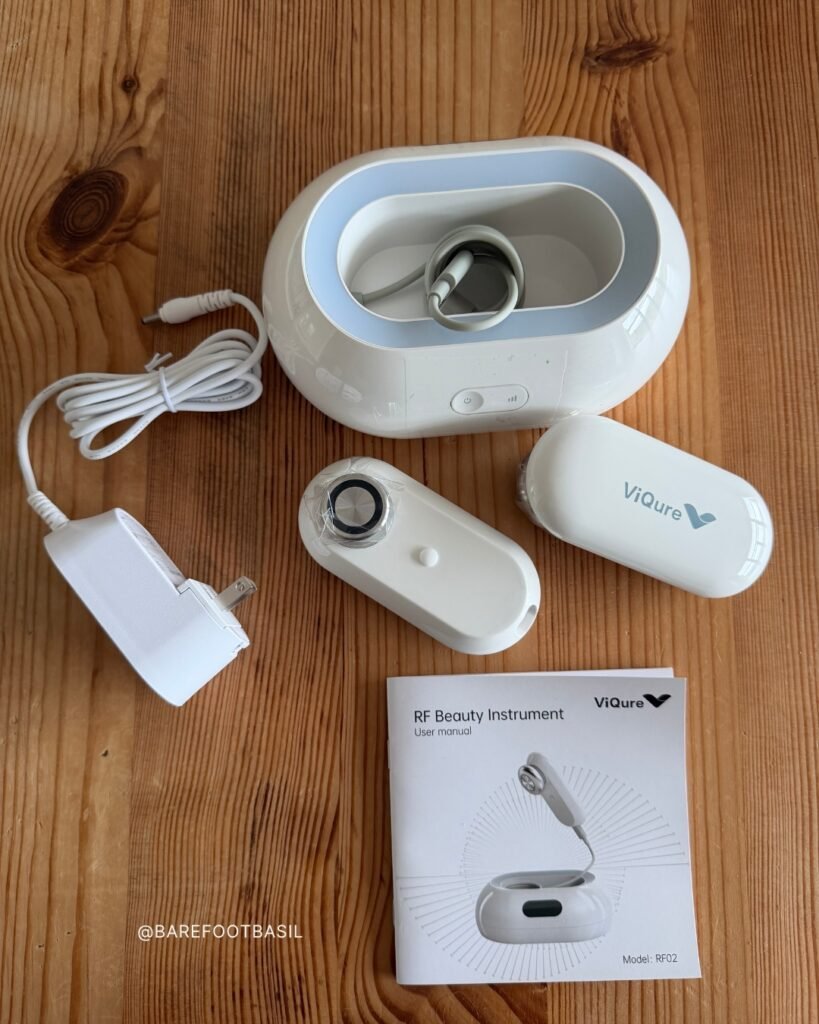
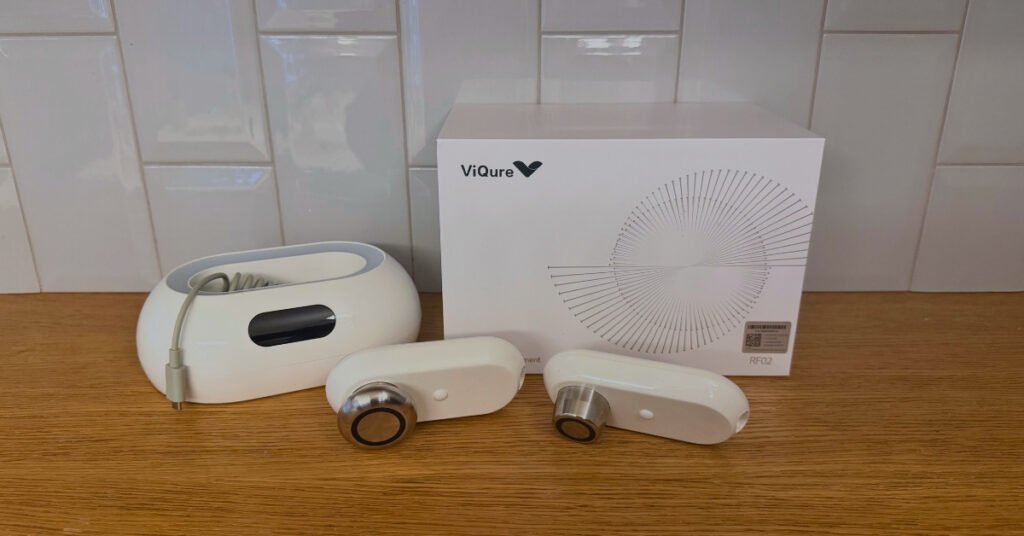
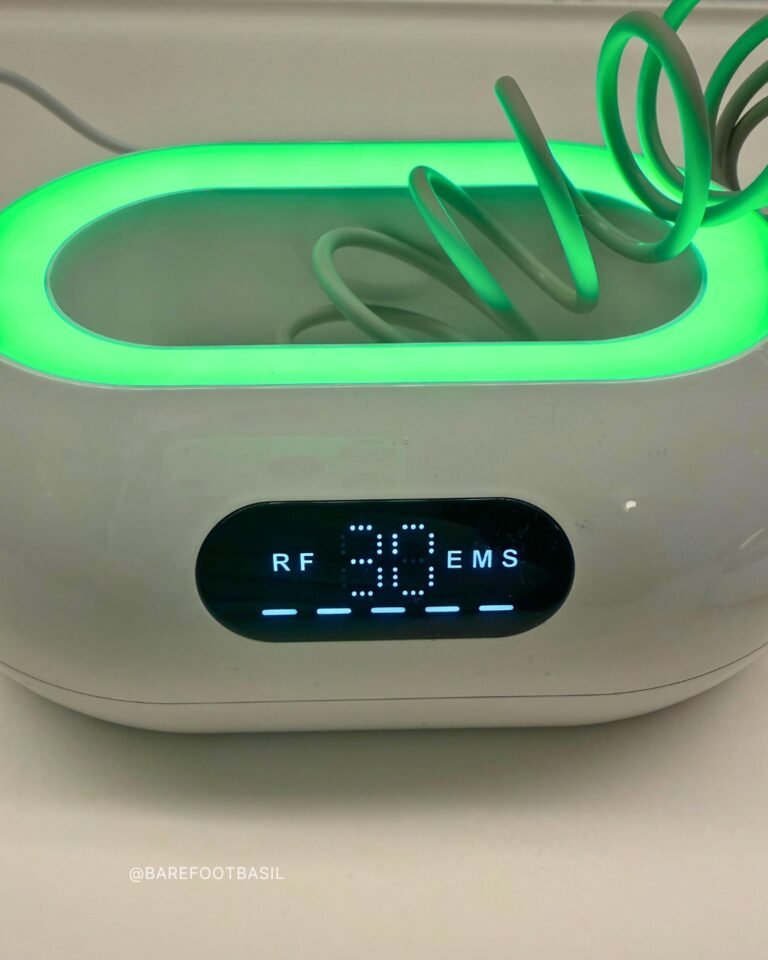
The ViQure Firmea is a plug-in home skincare device that combines radiofrequency (RF) and Electromyographic Stimulation (EMS). It can be used in three modes:
- RF only
- EMS only
- RF and EMS together
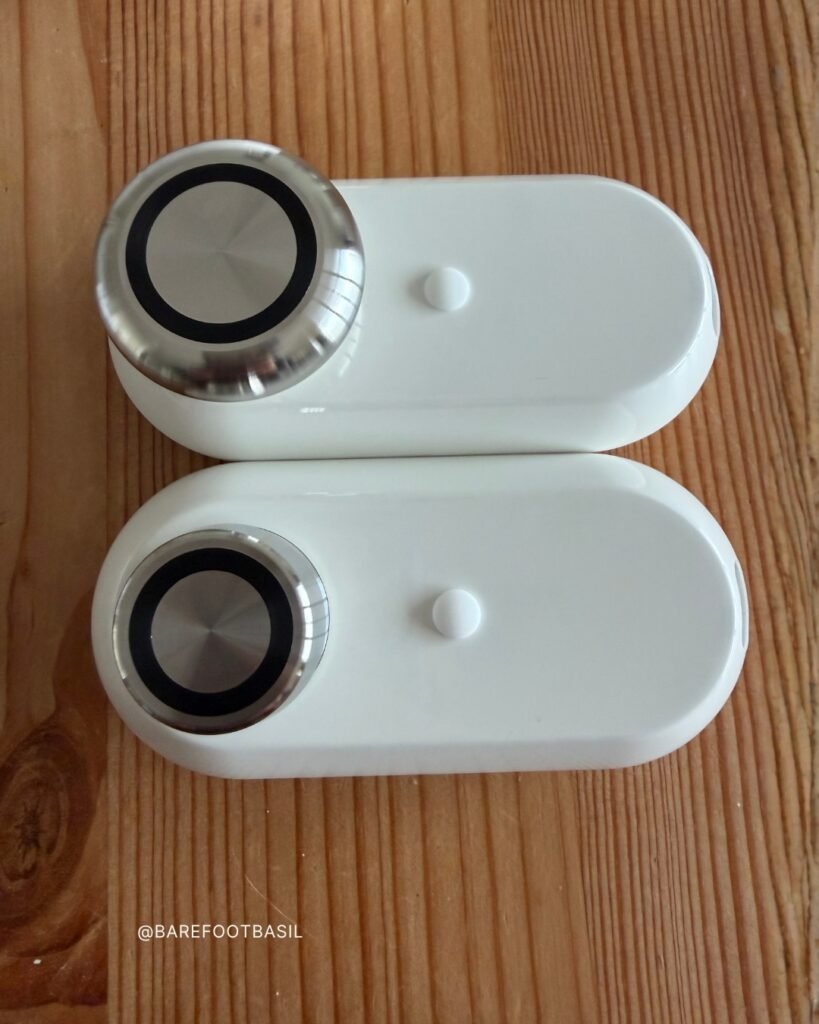
It comes with a smaller face probe (second picture at the top) and a larger body probe second picture at the bottom).
A little note for my fellow Europeans. It comes with a US plug, so make sure to get a converter to use it in Europe.
| ViQure Firmea - Specifications | |
|---|---|
| ⚡ Technology | |
| RF type | Bipolar RF |
| RF frequency | 1 MHz |
| EMS frequency | 50 kHz |
| Maximum stated output | 24 W |
| 🎛️ Device Features | |
| Intensity levels | 5 |
| Modes | RFEMSRF + EMS |
| Probes | FaceBody |
| Timer | 30-minute operating countdown |
| Temperature sensor | No |
| 🗓️ Usage Schedule | |
| Recommended facial session | Approximately 8 minutes |
| Initial treatment frequency | Every 3-4 days |
| Maintenance | Every 1-2 weeks |
The timer is set to 30 minutes, but I never go over 15 minutes when treating my face and body. The brand recommends, and I do, about 8 minutes to treat the face. Some days it takes even quicker. You only need to pass the area twice, not for more effect, but to make sure you did not miss a spot.
What do RF and EMS actually do?
Let’s get into the science.
Radiofrequency (RF)
Radiofrequency uses electrical energy to gently heat the skin. This heat may temporarily tighten existing collagen and help the skin rebuild collagen over time.
Clinical trials and systematic reviews show that RF energy provides modest to moderate aesthetic improvements by tightening skin, reducing rhytides, and improving scar texture (1).
A randomized split-face study of 33 women found improvements after 12 weeks of using a home device that combined 1 MHz bipolar RF with red light, concluding that the device was more effective than the commercially available anti-aging cosmetics (2).
EMS
EMS sends electrical impulses through the skin to stimulate superficial facial muscles. A
4-week trial of a medium-frequency at-home EMS device reported significant increases in the skin elasticity parameter R2, along with marked reductions in skin sagging and double-chin fullness (3).
Other controlled studies have reported measurable improvements in facial muscle thickness, skin elasticity, wrinkles, nasolabial folds, and facial contour after consistent use over eight to twelve weeks.
In one randomized controlled study involving 108 women, twelve weeks of facial neuromuscular electrical stimulation increased zygomatic major muscle thickness by 18.6%. Participants also reported improvements in facial firmness, tone, and lift(4). Another controlled split-face study found improvements in skin elasticity, crow’s feet, jawline angle, cheek and submental volume, and nasolabial fold depth after eight weeks (5).
By repeatedly stimulating targeted muscles, it may improve muscle condition and influence the appearance of the overlying facial contours. However, we do not yet know how long these changes last after treatment stops, and results from one EMS device do not automatically apply to every product.
The Firmea produces EMS at 50 kHz, which falls within the high-frequency range used in some recent facial NMES research. However, frequency alone does not establish that two devices deliver equivalent treatment.
RF + EMS together
While RF primarily targets the skin with controlled heating, EMS works more directly on the muscles that support facial structure.
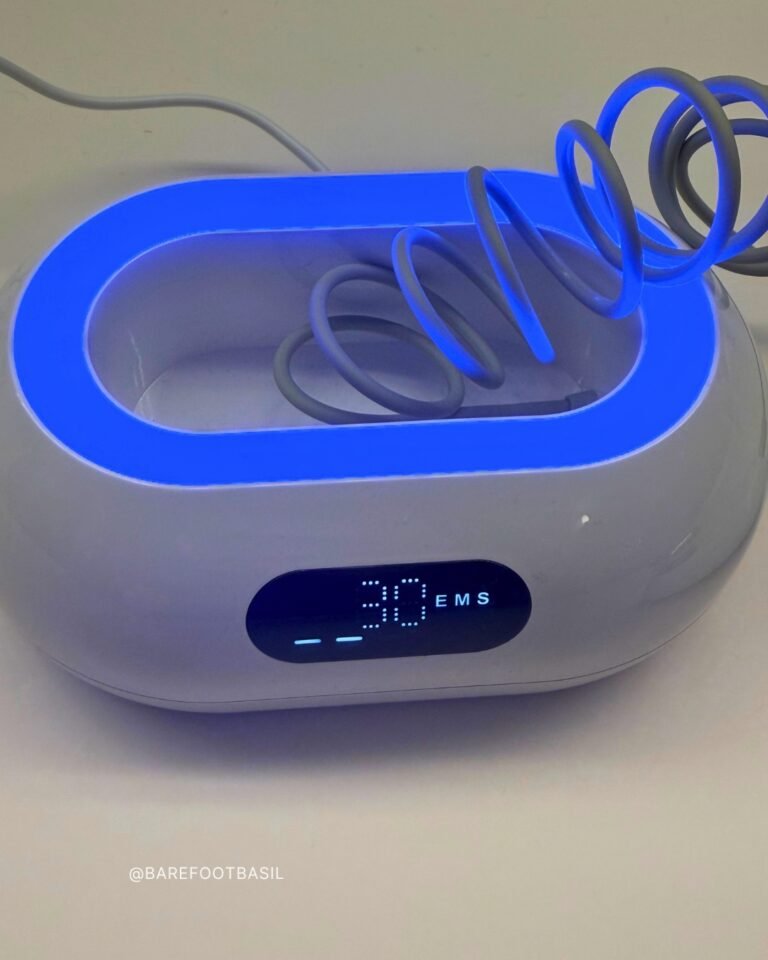
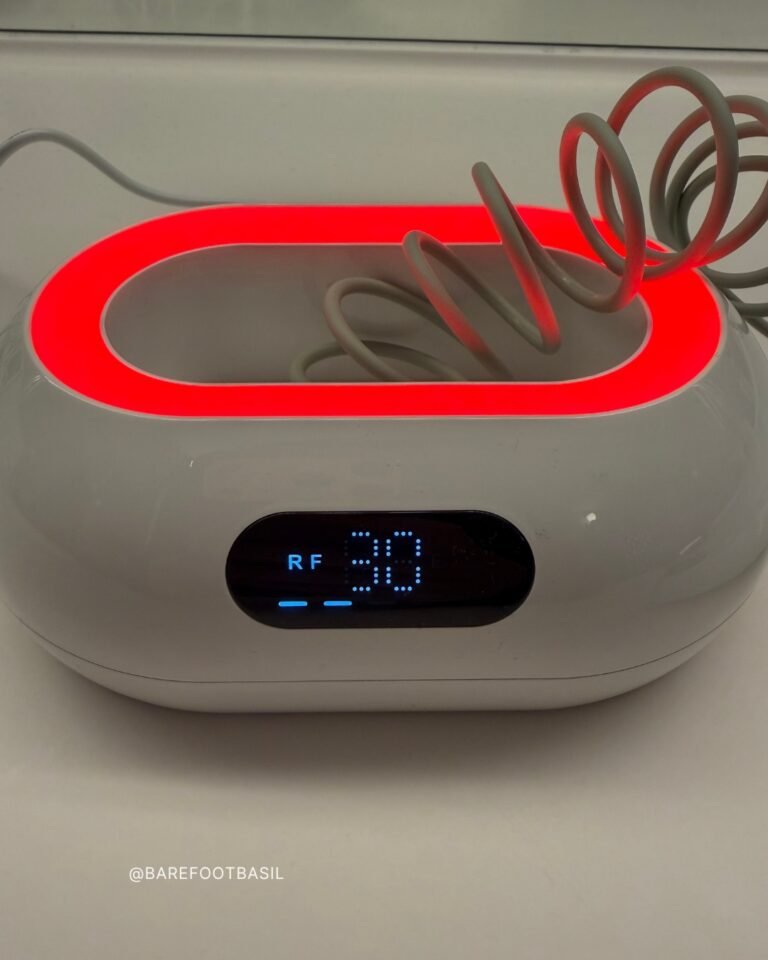
- RF uses controlled heat to support collagen remodeling and may gradually improve skin firmness, fine lines, and texture.
- EMS stimulates facial muscles and may improve muscle thickness, facial contour, elasticity and the appearance of sagging with consistent use.
- RF + EMS targets both the skin and its underlying muscular support in one treatment, although the evidence does not yet prove that combining them produces better results than using each technology separately.
How hot does the Firmea get?
Most devices approved for home use heat up to 42°C, so I wanted to clarify the temperature on this device, as the ViQure website lists a temperature range of 55-65°C.
The brand clarified that this describes the target temperature within the dermis, not the probe or the skin’s surface. According to ViQure, the estimated surface temperature is 38-42°C, the most studied and safest temperature for at-home skin-tightening devices.
| Level | Estimated skin-surface temperature |
|---|---|
| 1 | 38°C |
| 2 | 39°C |
| 3 | 40°C |
| 4 | 41°C |
| 5 | 42°C |
These are estimated temperatures. The device has no temperature sensor, so it doesn’t continuously measure skin temperature or automatically adjust energy in response.
This makes correct technique important.
I use plenty of conductive gel, keep the probe moving continuously, and stop if an area feels a bit too hot. I also only use level 2 on my face, especially in more sensitive areas with thinner skin.
My experience of the heat
I am gradually learning what feels comfortable while using the device. To make sure it does not feel too hot, I work in sections of my face and body. I apply a generous amount of conductive gel and move the probe in circular motions every 2 seconds. Honestly, I took a bit longer to get used to the electric current than the heat.
On my face, I use only level 2 and avoid the under-eye area and eyelids.
On my body, I use levels 3 and 4 and never feel it’s too hot.
How I used the Firmea on my face
ViQure recommends a facial treatment time of approximately eight minutes. The probe should travel at about 2 cm per second, using two passes to ensure full coverage.
The recommended movements are:
- Forehead: from the eyebrows towards the hairline
- Cheeks: from the inner cheek outwards and upwards
- Jawline: from the chin towards the ear
- Chin: move in sections for even coverage
- Eye area: work only around the outside of the orbital bone
Keep the probe moving rather than resting in one area. Two passes provide even coverage; more passes will produce better results.
My experience. I find the areas around the eyes a bit trickier to treat, since the EMS makes them twitch. It took a while to get used to it, but I definitely avoid the eye area, where the skin is thinner.
How often should you use it?
The Viqure recommends:
- First eight weeks: once every 3-4 days
- More intensive schedule: every 2-3 days, if well tolerated
- Maintenance: once every 1-2 weeks
You don’t need to use combined RF + EMS in every session. ViQure suggests selecting the mode based on your goal:
- RF for firmness, fine lines and texture
- EMS for muscle stimulation and facial contour
- RF + EMS when you want to combine both
I am impatient and want improvement in lines and texture as well as facial contour, and use the combined setting.
My routine
I use the Firmea 3 times a week in combined RF and EMS mode at level 2. I divide the eight-minute treatment between my forehead, cheeks, chin, and jawline. I start at the bottom of my face and work my way up.
ViQure recommends using a professional conductive gel because it provides the conductivity, slip, and consistent skin contact both RF and EMS require. I used Valquer conductive gel and added more whenever the probe stopped gliding easily. After treatment, I don’t feel any discomfort. My face feels a bit dry after treatment, but I think it’s because of the conductive gel. I shower immediately after treatment and moisturize. Avoiding any irritants like retinol or vitamin C.
ViQure sells its conductive gel, so I suggest adding it to your cart when you buy the device so you can use it as soon as it arrives, since it doesn’t come with the device. Since you will be using a conductive gel on your face, make sure you get a good-quality, unscented gel.
My experience using the Viqure Firmea
I am new to using RF and EMS devices. I have never used them at home or in the clinic, so I was a bit nervous, especially when my eye twitched if the probe got too close. But after asking the brand a lot of questions and doing my own research, I started trusting the process.
I recommend starting slow, using the lowest settings, and then increasing them gradually.
It is also important to make sure you are comfortable with the amount of heat or electric pulse you are receiving. This kind of treatment should not feel uncomfortable or painful.
It took me a few weeks to get used to incorporating it into my weekly routine, but now I find it very enjoyable and look forward to it. I always use it on Sundays, as it feels like a self-care day. Most of the time, I use it before the shower so I can wash off the conductive gel.
You might want to buy a more hydrating conductive gel, but mine seems to dry out my skin a bit, so I only apply it to the area I’m treating and wipe it off when I’m finished.
The usage is very straightforward, as the device only has two buttons, one for the treatment and another for the strength.
What I like About Firmea
- Combines RF and EMS in one device
- Separate face and body probes
- Five adjustable intensity levels
- Warm treatment without significant discomfort
- Only around eight minutes for the face
- Plug-in design avoids declining battery power
- Conductive gel provides good glide
What could be improved
- No temperature sensor or automatic heat adjustment
- The instructions should give clearer treatment times for individual body areas
- It cannot be used directly underneath the eyes
- Requires a conductive gel (that can get a bit messy and needs wiping off or showering after use)
- Product-specific testing is limited
- Long-term results require consistent use and patience
Found this review helpful?
Get more honest recommendations in your inbox.
Thank you!
You have successfully joined our subscriber list.
FAQ
How long should a Firmea facial treatment take?
ViQure recommends approximately eight minutes for the full face. The device’s 30-minute countdown is an operating timer, not the recommended time for one facial session. Pass over each area twice to make sure you don’t miss a spot.
Can you use Firmea under the eyes?
Do not use it directly on the lower eyelid, under-eye bags, or near the eyeball. The small probe can be moved along the cheekbone and around the outside of the orbital bone.
Can I use a serum instead of conductive gel?
A professional conductive gel is recommended. An ordinary serum may not provide sufficient conductivity, lubrication, or consistent contact.
Can I use retinol after radiofrequency?
ViQure recommends avoiding retinoids and exfoliating acids on the same day as treatment. You can apply a gentle moisturizer or non-irritating serum after removing the conductive gel.
Can I use Firmea and red light therapy on the same day?
The brand recommends separate days. If you use both on the same day, it suggests leaving at least 12 hours between sessions and monitoring the skin for irritation.
How frequently should I use it?
ViQure recommends using it every 3-4 days during the first eight weeks, then maintaining every 1-2 weeks, depending on skin tolerance.
Is the ViQure Firmea clinically proven?
Broader RF and EMS technology has supporting research, but Firmea has only been tested in a small, eight-person brand study. That is not sufficient to call the device conclusively clinically proven.
Is the ViQure Firmea worth it?
I think this device is great because it combines two technologies. I also love that one device works for both face and body. The key with this device, like with all other at-home skin care devices, is consistency and patience. So far, I love it and will keep updating this article.
Health Disclaimer: This post is for informational purposes only and is not medical advice. Always consult a qualified healthcare professional before making changes to your supplements, medications, or treatment plan, particularly during perimenopause or if you have an existing health condition.
References
1.Kumar, N., Kim, H. M., Nishikawa, A., Heo, C., & Wu, W. T. L. (2026). Effectiveness of Radiofrequency Microneedling in the Treatment of Dermatological Conditions: A Systematic Review. Aesthetic Plastic Surgery, 50, 5282 – 5317. https://doi.org/10.1007/s00266-026-05834-y
2.Shu X, Wan R, Huo W, Li Z, Zou L, Tang Y, Li L, Wang X. Effectiveness of a Radiofrequency Device for Rejuvenation of Aged Skin at Home: A Randomized Split-Face Clinical Trial. Dermatol Ther (Heidelb). 2022 Apr;12(4):871-883. doi: 10.1007/s13555-022-00697-y. Epub 2022 Mar 6. PMID: 35249173; PMCID: PMC9021338. https://pmc.ncbi.nlm.nih.gov/articles/PMC9021338/
3. Shin, D., Park, M.-J., Choi, Y.-J., & Hur, Y. (2022). Effects of Medium Frequency EMS (Electrical Muscle Stimulation) At-home Beauty Device on the Facial Skin Improvement. Journal of the Korean Society of Cosmetology. https://doi.org/10.52660/jksc.2022.28.5.1031
4. Kavanagh S, Newell J, Hennessy M, Sadick N. Use of a neuromuscular electrical stimulation device for facial muscle toning: a randomized, controlled trial. J Cosmet Dermatol. 2012 Dec;11(4):261-6. doi: 10.1111/jocd.12007. PMID: 23174048. https://pubmed.ncbi.nlm.nih.gov/23174048
5. Omatsu, J., Yamashita, T., Mori, T., Osuji, Y., Kawanabe, R., Kuzumi, A., Yoshizaki, A., Yokota, T., Yamazaki, K., Sato, S., & Yoshizaki, A. (2024). Neuromuscular electrical stimulation for facial wrinkles and sagging: The 8‐week prospective, split‐face, controlled trial in Asians. Journal of Cosmetic Dermatology, 23, 3222 – 3233. https://doi.org/10.1111/jocd.16403

Silvija Meilunaite, PN1-NC, CSMC, is a certified nutrition coach and menopause coaching specialist. Combining current scientific research with her own experience of perimenopause, she writes evidence-based articles, practical guides, and in-depth product reviews to help women over 40 make informed decisions about nutrition, strength training, recovery, supplements, non-toxic living, and wellness products.