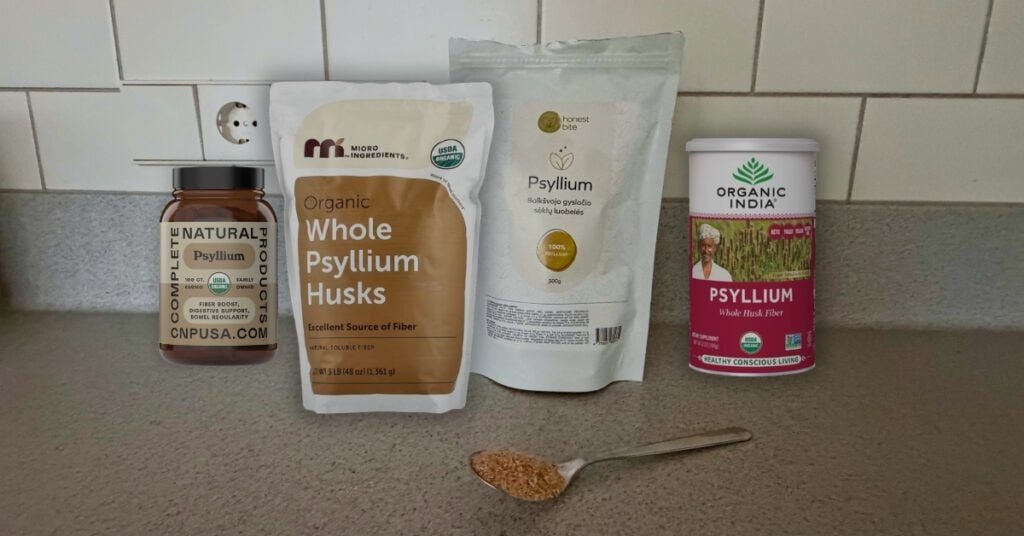
If you are looking for ways to add more fibre to your diet, Psyllium Husk is one of the easiest ways to do so. But you need to know a few things before you start taking it.
I take Psyllium Husk almost daily and recommend it to people struggling with constipation and LDL cholesterol. In this article, I will cover the best ways to take it and what you should avoid. I will explain the benefits and downsides, and break down the best products on the market right now.
Why trust this review? Here's how I research, test, and score every product.
TL;DR
Best value whole husk: Micro Ingredients, if you use psyllium regularly and want a large bag.
Best for travel: Konsyl’s pre-measured stick packs.
Prefer capsules? Peak Performance avoids the texture, but provides much less psyllium per serving.
Before buying: Check the actual psyllium amount, cost per gram and evidence of contaminant testing. Organic certification alone does not establish purity.
When taking it: Start with the lowest label dose and always use enough liquid. Never swallow loose psyllium dry.
Disclosure: As an Amazon Associate, I earn from qualifying purchases. I may also earn from other affiliate links, at no extra cost to you. Thank you for supporting Barefoot Basil! Full Affiliate Disclosure
Brands recommend different serving sizes for psyllium husk, but clinical doses typically range between 5 and 15 g daily. With Whole husk or powder, 5g to 15g per day is easy to achieve; however, with capsules, it is a bit trickier and would become too expensive. My suggestion is that, if you can get used to the taste, you use whole or powdered psyllium husk day to day and only use capsules and sachets when you are travelling, on the go, or just for maintenance.
Best Psyllium Husk, Whole Husk
ORGANIC INDIA Whole Psyllium Husk
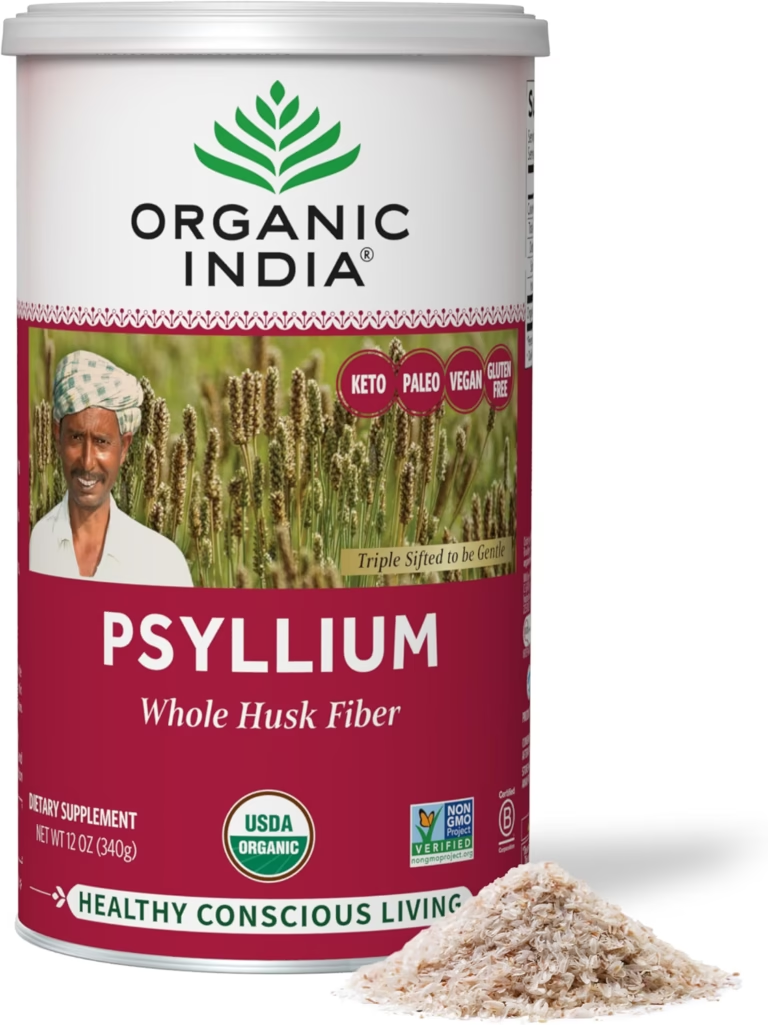
Size: 24 ounces
Servings: 136
Dose: 10g per serving
Third-party tested: Yes
Organic: Yes
Ingredients: Organic Whole Husk Psyllium (seed husk)
A single-ingredient organic option for regular use. The 24-ounce pack offers a middle ground between a small container and a large bulk bag.
ConsumerLab named Organic India Psyllium Husk a top pick because its batch testing showed it contained very little lead compared to competitors.
Best Overall
Yerba Prima, Organic Psyllium Whole Husks
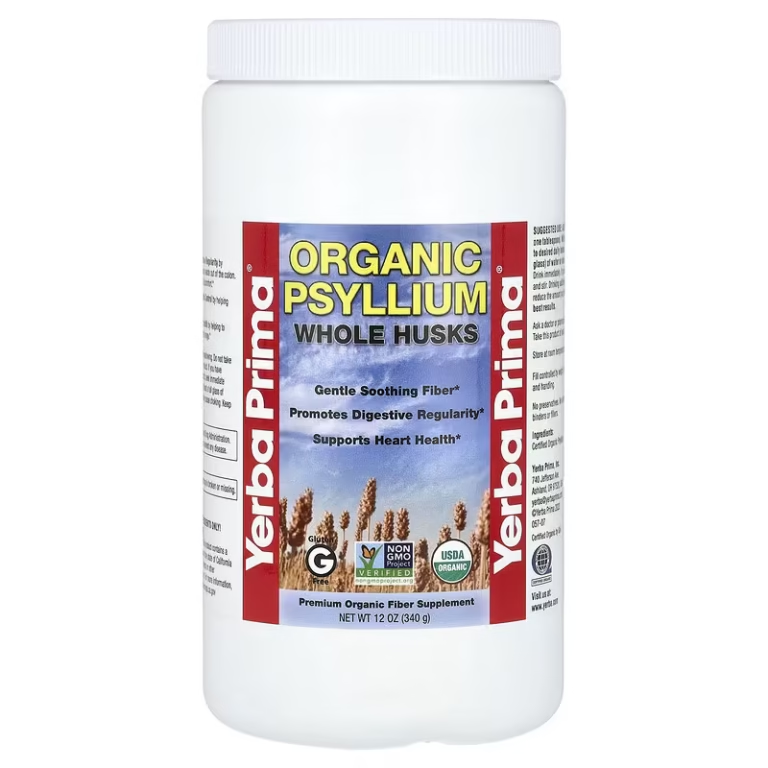
Size: 12ounces ( also available in 20 oz pack)
Servings: 68
Dose: 5g per serving
Third-party tested: Yes
Organic: Yes
Ingredients: Organic Whole Husk Psyllium
Another psyllium option tested and approved by ConcumerLab.
Best smaller pack of whole husk
Micro Ingredients, Organic Whole Psyllium Husks
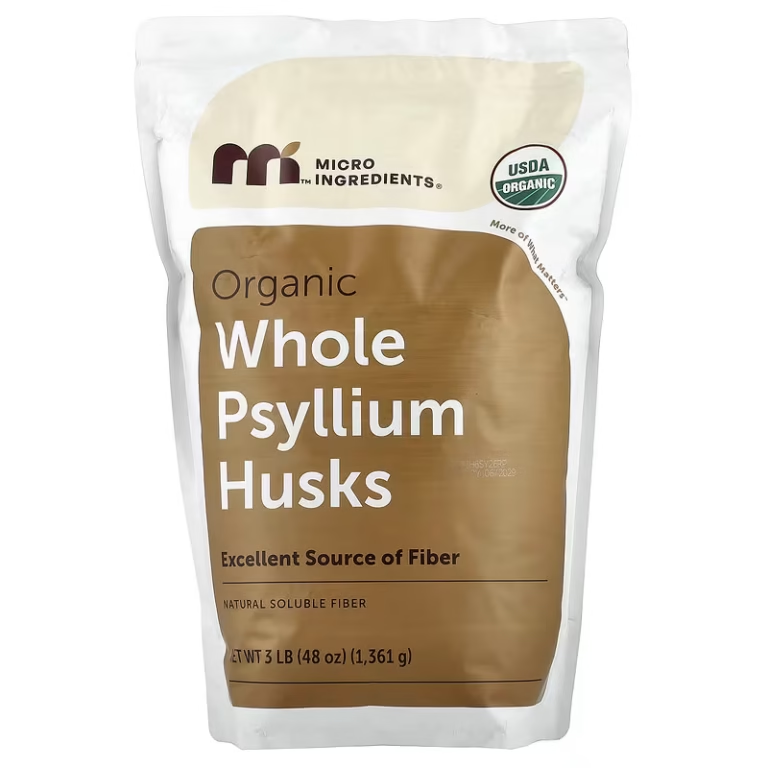
Size: 48 ounces
Servings: 136
Dose: 10g per serving
Third-party tested: Yes
Organic: Yes
Ingredients: Organic Whole Husk Psyllium
The large 48-ounce bag makes this one worth considering if you already take psyllium regularly. Based on the prices listed here, it costs less per gram than the other whole-husk options.
Best value whole husk
Best Psyllium Husk Powder
If you are not too keen on the texture of whole psyllium husk, you might want to try the powder, which is easier to mix into smoothies, soups, water, or juice.
Sunwarrior Organic Psyllium Husk Powder
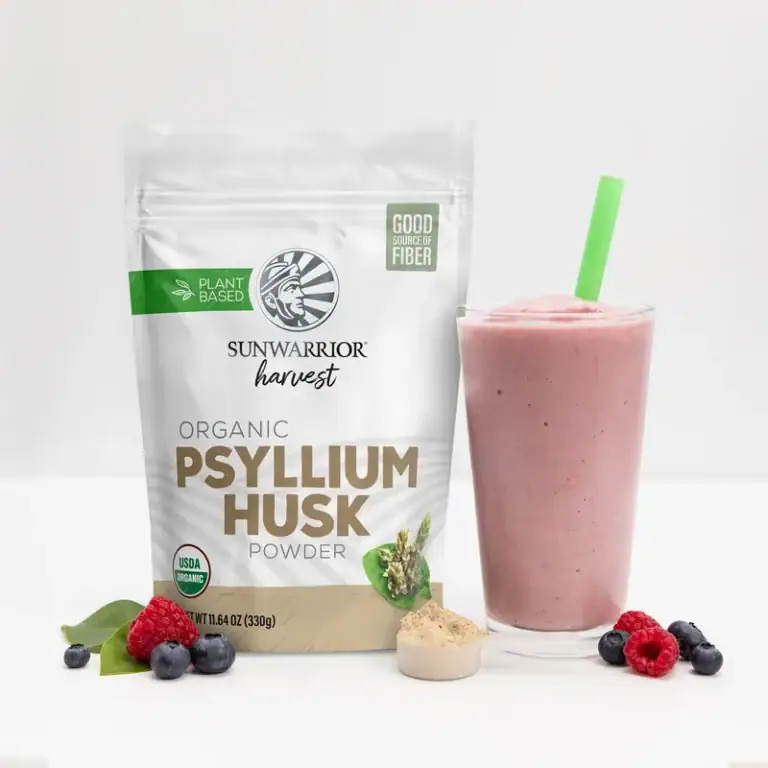
Size: 11.6 ounces
Servings: 33
Dose: 10g per serving
Third-party tested: Yes
Organic: Yes
Ingredients: Organic Psyllium Husk Powder
Sunwarrior is a well-known supplement brand known for good quality powders.
Best established brand
Himalaya Organic Psyllium Husk Powder
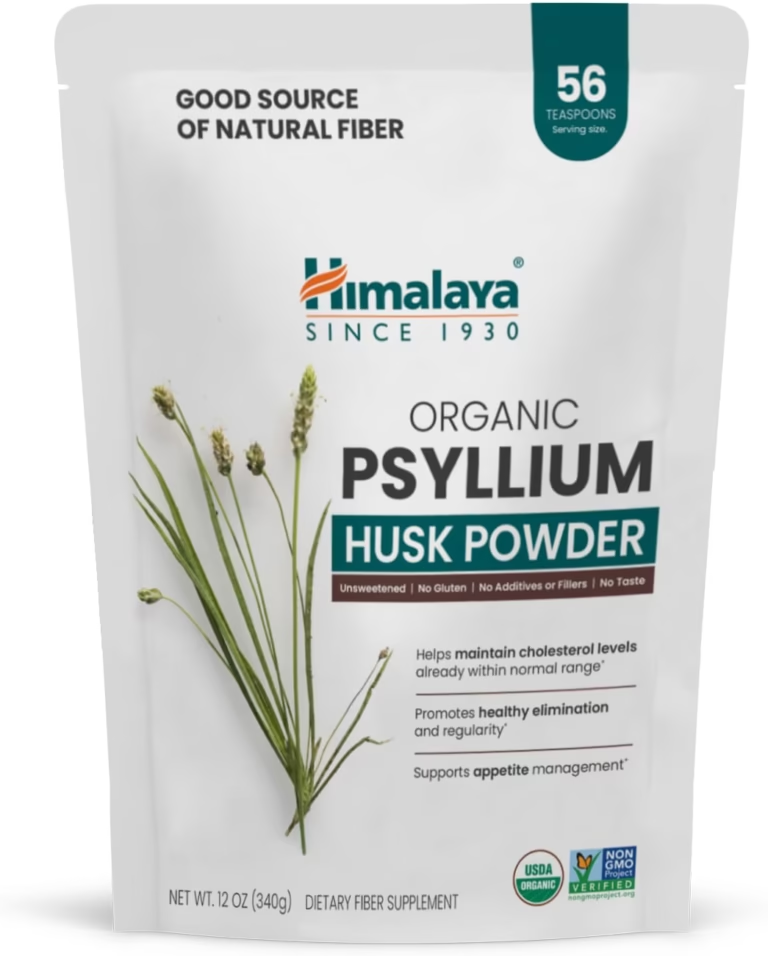
Size: 12 ounces ( also comes in 24 OZ)
Servings: 34
Dose: 10g per serving
Third-party tested: Yes
Organic: Yes
Ingredients: Organic Psyllium Husk Powder
Best for
Bet Psyllium Husk Capsules
I recommend taking Psyllium Husk as a whole or powder, since a daily dose of 10g can be expensive and not very practical. However, if you are travelling or only want a small amount of Psyllium daily or just don’t like the taste, capsules might be a good option for you. Just make sure to look at the full ingredient list to make sure they do not contain any unnesesary addictives.
Peak Performance USDA Organic Psyllium Husk Vegan Capsules
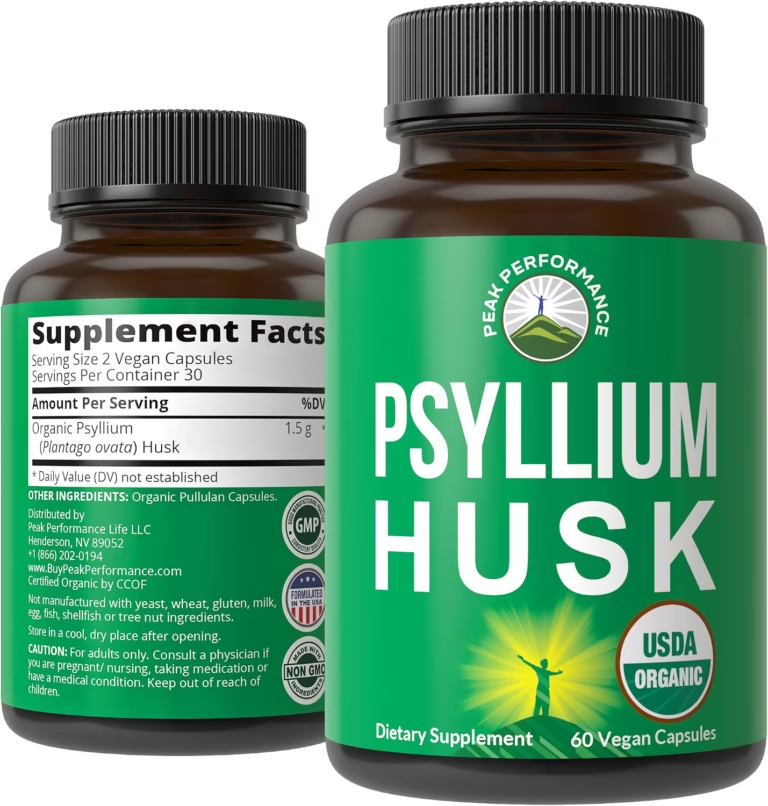
Size: 60 capsules
Servings: 30
Dose: 1.5 g per serving
Third-party tested: Yes
Organic: Yes
Ingredients: Organic Psyllium Husk Powder, organic pullulan capsule shell
An option for people who dislike psyllium’s texture and only want a small amount. Each two-capsule serving provides 1.5 g, so powder is more practical for larger amounts.
Best potency capsules
Complete Natural Products Organic Psyllium Husk Capsules
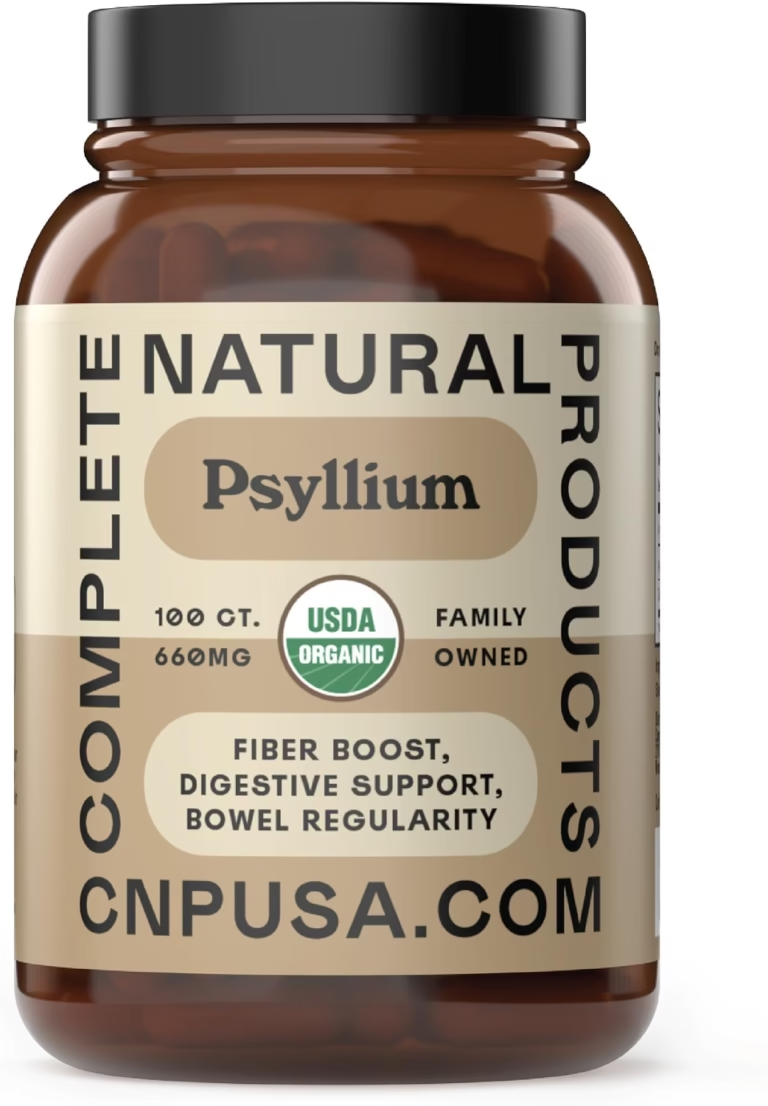
Size: 100 capsules ( comes in 500 aswell)
Servings: 50
Dose: 1.3 g per serving
Third-party tested: Yes
Organic: Yes
Ingredients: Organic Psyllium Husk Powder, organic pullulan capsule shell
These capsules are among the most potent on the market, yet you would still need 15 capsules to reach 10g of Psyllium husk. This really shows how expensive capsules are compared to whole or powdered products. The brand also sells packs of 500.
Best for convinience
Best psyllium sachets
Konsyl USDA Organic Psyllium Husk Powder
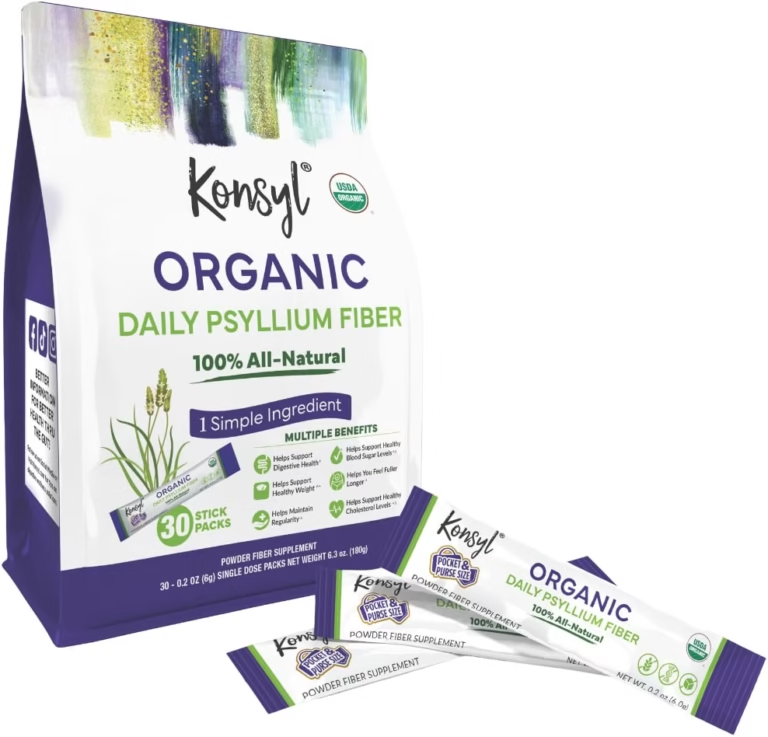
Size: 30 servings
Servings: 30
Dose: 6g per serving
Third-party tested: Yes
Organic: Yes
Ingredients: Organic Psyllium Husk Powder
If you want to take Psyllium Husk on the go but want slightly better value for money, consider sachets. Not as cost-effective as bulk powder, but quite good because it is pre-measured.
Best for travel

What is psyllium husk, and how does it work?
Psyllium husk comes from the outer coating of Plantago ovata seeds. It is rich in soluble fibre, which absorbs water and forms a gel.
This helps soften hard stools and makes them easier to pass. Its gel-forming properties also help explain its benefits for cholesterol and blood sugar. Psyllium is called ispaghula husk on some labels.
Psyllium husk is about 70% to 77% dietary fibre by weight (roughly 7 to 7.7 grams of fibre per 10 grams). For most forms, roughly 70% to 80% of the fibre is soluble, and the rest is insoluble fibre.
If you want to increase your fibre intake through diet, check out my article:
Psyllium husk benefits: what does the research show?
1. Helps relieve constipation
Psyllium is known to relieve constipation. It holds water in the stool, helping make bowel movements easier.
A 2022 review of 16 randomised trials found that fibre supplements improved chronic constipation, with psyllium among the most effective options (1). Results varied between studies, so finding a dose you tolerate is important. As with all supplements, start small and slow, then increase your dose accordingly.
2. Can lower LDL cholesterol
You can add Psyllium to your diet as one natural way to lower LDL cholesterol.
A 2018 review of 28 trials involving 1,924 people found that around 10.2 g of psyllium daily lowered LDL cholesterol by an average of 0.33 mmol/L, or about 13 mg/dL (2).
That is a significant improvement, but psyllium should complement any prescribed treatment, not replace it.
3. May help with IBS symptoms
If you have IBS, the type of fiber you choose is very important. I remember when I was diagnosed with IBS, Psyllium was the first thing I was prescribed.
In a 12-week trial involving 275 people with IBS, 57% of those taking psyllium reported symptom relief during the first month, compared with 35% taking a placebo (3).
It will not suit everyone, but it can be worth discussing with your healthcare professional if other fiber supplements make your symptoms worse. I don’t struggle with IBS symptoms that much anymore, but I always have some psyllium husk in my cupboard.
4. Can support blood sugar management
The greatest blood sugar benefits appear in people with elevated glucose.
A review of 35 randomized studies found the most improvements in people with type 2 diabetes. People with normal glucose levels did not experience significant glucose lowering (4).
This research included authors affiliated with Procter & Gamble, which sells Metamucil, so I would take it with a pinch of salt.
Note: If you take diabetes medication, check with your clinician before adding psyllium.
Is psyllium husk helpful during perimenopause?
Psyllium may be useful during perimenopause, especially if you are suffering from constipation or high LDL cholesterol.
Research following 1,440 women through the menopause transition linked falling estradiol levels with higher LDL cholesterol (5).
Psyllium can be helpful for cholesterol and bowel benefits in perimenopause, but most of that evidence comes from studies in general adults.
I would consider it for a specific reason, such as improving regularity or supporting cholesterol management. Claims about “balancing hormones” or “flushing out excess estrogen” are more marketing than proven science.
How much psyllium husk should you take daily?
Start with the lowest adult dose on your product’s label. Increase gradually if needed and tolerated. Taking too much too quickly can cause gas, bloating or discomfort.
The right amount depends on the product and why you are taking it:
| Your goal | What to know |
|---|---|
| Constipation relief | Follow the label and adjust within the directions based on your response. |
| Cholesterol support | Around 10 g of psyllium daily, often divided into smaller doses, is the most commonly studied amount. |
| General fiber support | You may need less. Consider how much fibre you already get through your diet. |
The cholesterol research dose refers to psyllium itself, rather than the total weight of a flavoured mixture. Check the label carefully. Do not exceed its directions to match a study dose.
How to take psyllium safely
Psyllium Husk forms gel when mixed with water; therefore, make sure you take it with the recommended amount of water to prevent stomach upset.
Mix each dose with at least 240 mL/8 oz of liquid, or more as directed on the label.
Stir and drink quickly before it becomes too thick.
Never swallow loose psyllium powder dry.
Take capsules with a full glass of liquid too.
Keep drinking enough fluid throughout the day.
Avoid taking it immediately before bed.
Use the product’s gram measurements where available. A teaspoon of whole husk may weigh differently from a teaspoon of finely ground powder.
Psyllium husk side effects and precautions
Gas and bloating are common, especially if you are not used to a large amount of fibre. Begin slowly and avoid increasing the amount if you feel uncomfortable.
Check medication timing. Psyllium can affect how some medicines and supplements are absorbed. The gap needed varies, so follow your product’s instructions and ask a pharmacist about your medicines. This is especially relevant for thyroid and diabetes treatments.
Speak to a healthcare professional before taking psyllium if you have difficulty swallowing, bowel narrowing or blockage, unexplained rectal bleeding, or significant abdominal pain with nausea or vomiting. Ask for advice if you have a prescribed fluid restriction.
Too little liquid can allow psyllium to swell and block the throat or oesophagus. Seek immediate medical help if you develop chest pain, difficulty swallowing or trouble breathing after taking it. Avoid breathing in the powder when mixing it, as it can also trigger allergic reactions.
Note on psyllium husk cancer warning
Psyllium husk itself does not cause cancer and may actually have the opposite effect (6). Prospective cohort meta-analyses link high dietary and cereal fibre (not specifically Psyllium) with a 10% to 13% relative risk reduction in colorectal cancer (7).
You might see cancer or other warnings on Psyllium Husk or other natural supplement packaging because of California’s strict labelling laws. These require warnings if a product contains trace amounts of heavy metals. Psyllium is a crop that, like other crops, naturally absorbs trace elements, including heavy metals, from the surrounding soil. This is a U.S. (specifically California) labelling requirement and not a medical finding that the fibre itself is carcinogenic. To make sure you buy good-quality Psyllium husk that is tested for heavy metal contamination, always choose a known brand that is transparent about 3rd-party testing and the results.
Found this review helpful?
Get more honest recommendations in your inbox.
Thank you!
You have successfully joined our subscriber list.
FAQ
Is psyllium husk powder better than whole husk?
Neither is better than the other. They have the same nutritional value, but different textures. Powder is finely ground, while whole husk has more texture. Choose the form you like more and can consume continuously.
Are psyllium capsules as good as powder?
Capsules contain psyllium too, but in smaller amounts. A capsule containing 500 mg provides only 0.5 g, so you might need 5 to 10 capsules a day to reach the recommended dose.
Can you take psyllium husk every day?
Clinicians sometimes recommend taking it daily for months. However, ongoing constipation deserves assessment. Follow the label and discuss longer-term use with your healthcare professional.
When is the best time to take psyllium?
Choose a time that fits your product’s directions and leaves the necessary gap from medicines. Avoid taking it immediately before bed. Consistency and enough liquid matter more than finding a perfect time of day.
Does psyllium husk expire?
Yes, it does, as it is a natural product, but if stored well, it can last for years. Check the packaging for the expiration date.
Health Disclaimer: This post is for informational purposes only and is not medical advice. Always consult a qualified healthcare professional before making changes to your supplements, medications, or treatment plan, particularly during perimenopause or if you have an existing health condition.
References
- van der Schoot A, Drysdale C, Whelan K, Dimidi E. The Effect of Fiber Supplementation on Chronic Constipation in Adults: An Updated Systematic Review and Meta-Analysis of Randomized Controlled Trials. Am J Clin Nutr. 2022 Oct 6;116(4):953-969. doi: 10.1093/ajcn/nqac184. PMID: 35816465; PMCID: PMC9535527. https://pubmed.ncbi.nlm.nih.gov/35816465/
- Jovanovski E, Yashpal S, Komishon A, Zurbau A, Blanco Mejia S, Ho HVT, Li D, Sievenpiper J, Duvnjak L, Vuksan V. Effect of psyllium (Plantago ovata) fiber on LDL cholesterol and alternative lipid targets, non-HDL cholesterol and apolipoprotein B: a systematic review and meta-analysis of randomized controlled trials. Am J Clin Nutr. 2018 Nov 1;108(5):922-932. doi: 10.1093/ajcn/nqy115. PMID: 30239559. https://pubmed.ncbi.nlm.nih.gov/30239559/
- Bijkerk CJ, de Wit NJ, Muris JW, Whorwell PJ, Knottnerus JA, Hoes AW. Soluble or insoluble fibre in irritable bowel syndrome in primary care? Randomised placebo controlled trial. BMJ. 2009 Aug 27;339:b3154. doi: 10.1136/bmj.b3154. PMID: 19713235; PMCID: PMC3272664. https://pubmed.ncbi.nlm.nih.gov/19713235/
- Gibb RD, McRorie JW Jr, Russell DA, Hasselblad V, D’Alessio DA. Psyllium fiber improves glycemic control proportional to loss of glycemic control: a meta-analysis of data in euglycemic subjects, patients at risk of type 2 diabetes mellitus, and patients being treated for type 2 diabetes mellitus. Am J Clin Nutr. 2015 Dec;102(6):1604-14. doi: 10.3945/ajcn.115.106989. Epub 2015 Nov 11. PMID: 26561625. https://pubmed.ncbi.nlm.nih.gov/26561625/
- El Khoudary SR, Chen X, Qi M, Derby CA, Brooks MM, Thurston RC, Janssen I, Crawford S, Lee JS, Jackson EA, Chae CU, McConnell D, Matthews KA. The independent associations of anti-Müllerian hormone and estradiol levels over the menopause transition with lipids/lipoproteins: The Study of Women’s health Across the Nation. J Clin Lipidol. 2023 Jan-Feb;17(1):157-167. doi: 10.1016/j.jacl.2022.11.008. Epub 2022 Nov 22. PMID: 36517413; PMCID: PMC9974763. https://pubmed.ncbi.nlm.nih.gov/36517413/
- Przybyszewska, J., Kuźmiński, A., Przybyszewski, M., & Popławski, C. (2024). The role and therapeutic effectiveness of Plantago ovata seed husk (psyllium husk) in the prevention and non-pharmacological treatment of gastrointestinal diseases. Part 1. Clinical use of psyllium husk in the treatment of irritable bowel syndrome, ulcerative colitis, and colorectal cancer. Gastroenterology Review, 19, 121-126. https://doi.org/10.5114/pg.2024.139209
- Aune, D., Chan, D. S. M., Lau, R., De Cássia Padula Alves Vieira, R., Greenwood, D. C., Kampman, E., & Norat, T. (2011). Dietary fibre, whole grains, and risk of colorectal cancer: systematic review and dose-response meta-analysis of prospective studies. BMJ, 343, d6617-d6617. https://doi.org/10.1136/bmj.d6617

Silvija Meilunaite, PN1-NC, CSMC, is a certified nutrition coach and menopause coaching specialist. Combining current scientific research with her own experience of perimenopause, she writes evidence-based articles, practical guides, and in-depth product reviews to help women over 40 make informed decisions about nutrition, strength training, recovery, supplements, non-toxic living, and wellness products.