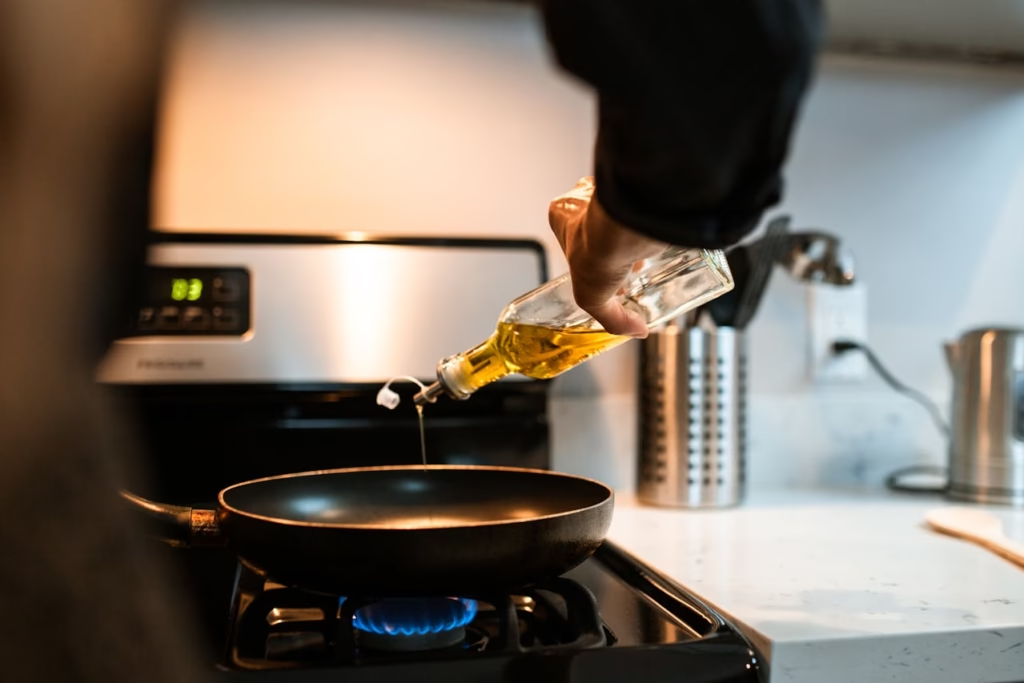
If you are following people in the wellness space on social media, you have noticed a very contradictory message about seed oils. Many health influencers are screaming to avoid them, and others are saying that seed oils are actually good for us. I am a person who splashes out on good quality olive oil, but cook with good quality, organic, cold-pressed sunflower or rapeseed oil.
All this noise left me confused. Should I swap my seed oils for avocado? Or just use olive oil for cooking?
So, who is right? Shall we consume or avoid seed oils? Let’s see what the science says.
TL;DR
Seed oils are not the villain social media makes them out to be. In moderate amounts, they’re safe and can actually support heart health, especially when they replace saturated fats like butter or coconut oil. The real issues are overconsumption of ultra-processed foods (which happen to contain low-quality seed oils) and not getting enough omega-3s to balance out the omega-6s.
For women in perimenopause, this balance matters even more because declining estrogen reduces our natural inflammation protection and makes us less efficient at producing omega-3s from plant sources.
My approach: cook with cold-pressed, organic seed oils or extra virgin olive oil, skip the ultra-processed stuff, and eat omega-3-rich foods like flaxseed and walnuts regularly.
What are the most popular seed oils?
Canola, soybean, sunflower, safflower, corn, and grapeseed are the seed oils mostly found in our kitchens. (5)
They are vegetable oils extracted from the seeds and are high in unsaturated fats (particularly polyunsaturated fatty acids like linoleic acid, an omega-6, and in some cases alpha-linolenic acid, an omega-3) and low in saturated fat.
Why is there so much fear about seed oils?
A few things keep coming up:
- Seed oils are high in omega-6 fats (especially linoleic acid) that cause inflammation.
- Seed oils contain hexane, a known carcinogen used to process seed oils.
- Seed oils cause heart disease and make you gain weight.
Why This Matters More During Perimenopause
If you’re in your 40s and navigating perimenopause like me, the seed oil debate is a bit more important. As estrogen declines, we lose some of its natural anti-inflammatory protection, and our cardiovascular risk starts to increase. That makes the type of fat we cook with more relevant than ever.
On top of that, research shows that postmenopausal women are significantly less efficient at converting plant-based omega-3s (ALA) into the EPA and DHA our brains and hearts actually need (13). So getting the omega-6 to omega-3 balance right isn’t just a wellness trend for us, it’s a priority.
The good news? The science doesn’t say to avoid seed oils. It says to be smart about which ones you choose, and to make sure you’re getting enough omega-3s alongside them.
Are seed oils inflammatory?
Omega-6 fats are often blamed for inflammation, and while they do play a role in inflammatory pathways, that doesn’t mean they cause chronic inflammation when consumed. That’s been tested in many human studies, and the findings don’t support it.(1)(2)(7)(8)
A 2017 meta-analysis of 30 randomized controlled trials found no significant increases in CRP, IL-6, or TNF-α, key markers of inflammation, with higher linoleic acid intake. (9)
Beyond fatty acid composition, another concern often raised is the chemical processing of these oils.
The Dangers of Hexane
Not all seed oils are made the same way. Oils can be extracted in two ways- chemically or mechanically. When oil is extracted chemically, hexane gas might be used, and at the end of the process, it should evaporate completely, but it could leave traces of it in the oil. Use of hexane is regulated, but there are no regulations or measures to ensure that any traces of it are left in the oils after extraction. The amounts would be so small that inhaling car fumes in the street is way worse for us. (6)
If, like me, you prefer to avoid food-processing chemicals, choose cold-pressed seed oils. Cold-pressed oil means that the oil is extracted only in a mechanical way, without using any chemicals like hexane, and not heating it too much, preserving more nutrients. (4)
Are seed oils good for heart health?
Swapping saturated fats (like butter) for unsaturated fats (like seed oils) consistently lowers LDL cholesterol.
Larger studies back this up: a 2020 meta-analysis found that replacing just 5% of daily calories from saturated fat with polyunsaturated fat led to fewer heart attacks (10). And a 16-year cohort study of 521,000+ people showed that using more plant oils like soybean and canola resulted in a 16% lower risk of total mortality(11).
There are some older studies, like the Sydney Diet Heart Study (1966–1973), that had contradictory findings, but they lacked omega-3 balancing and had flawed designs(12). New data consistently show cardiovascular benefits when seed oils replace animal fats.
Are seed oils making us fat?
No, Seed Oils Don’t Make You Fat.
All fats are calorie-dense, 9 calories per gram, while protein and carbohydrates are only 4 calories per gram. But seed oils don’t cause weight gain. That only happens when you consistently eat more calories than you burn. Research shows no evidence that seed oils lead to more weight gain than other fats. So instead of avoiding seed oils, we need to be conscious about overeating calorific foods in general. A double cheeseburger with fries, even if cooked in avocado oil, is more likely to cause weight gain than roast veggies with a small drizzle of seed oil.
If you are trying to lose weight, minimise fried foods and be conscious of how much oil you use in general. Try some ways to reduce the amount of oil you use. Roast instead of frying. Use vinegar or water when sautéing vegetables. Use a measuring spoon instead of drizzling oil straight from the bottle.
Most ultra-processed foods have seed oils, and most of the time, they will not be of the best quality. But we shouldn’t avoid ultra-processed foods because of seed oils, but because ultra-processed foods are low quality and use large amounts of oils and other ingredients with empty calories.
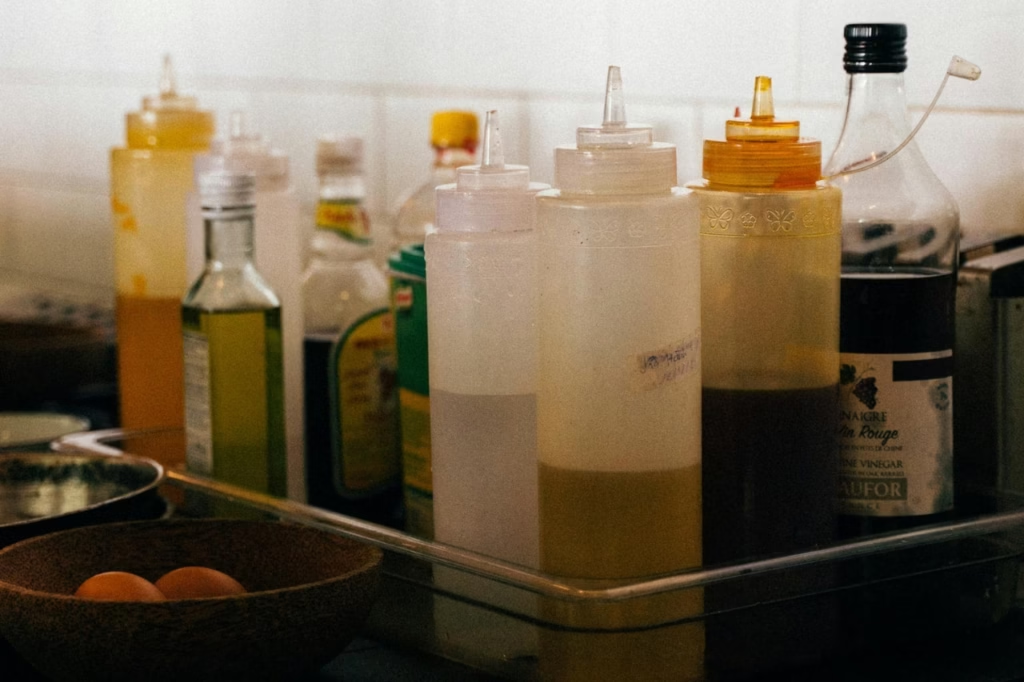
What Oil Should You Use?
| Oil | Main fat type | Omega-6 : Omega-3 | Smoke point | Best for | Verdict |
|---|---|---|---|---|---|
| Extra virgin olive oil | MUFA (oleic acid) | ~10:1 | Medium-high (~190°C) | Dressings, sautéing, moderate-heat cooking | Best everyday choice |
| Avocado oil | MUFA (oleic acid) | ~13:1 | High (~270°C) | Frying, baking, high-heat cooking | Best for high heat |
| Canola / Rapeseed oil | MUFA + PUFA | ~2:1 | High (~230°C) | All-purpose cooking, baking | Good — best omega ratio of seed oils |
| High-oleic sunflower oil | MUFA (oleic acid) | Very low omega-6 | High (~230°C) | Frying, roasting | Good for high heat |
| Regular sunflower oil | PUFA (linoleic acid) | ~70:1 | Medium-high (~225°C) | Occasional frying and baking | Fine in moderation |
| Soybean oil | PUFA | ~7:1 | High (~230°C) | Cooking, though often in processed foods | Fine — watch for ultra-processed sources |
| Flaxseed oil | PUFA (ALA omega-3) | ~1:3 (omega-3 dominant) | Low (~107°C) | Dressings, smoothies — never heat | Great omega-3 boost |
| Coconut oil | Saturated (~90%) | Negligible PUFAs | Medium (~175°C) | Occasional use, specific recipes | Use sparingly — raises LDL |
| Butter / Ghee | Saturated | Negligible PUFAs | Medium (butter ~150°C, ghee ~250°C) | Flavour, occasional cooking | Use sparingly — high in saturated fat |
Best for Everyday Cooking and Longevity:
- Extra Virgin Olive Oil (EVOO): Rich in polyphenols, antioxidants, and MUFAs. Despite a moderate smoke point, it’s chemically stable. Best for dressings and moderate heat
- Avocado Oil: Similar profile to olive oil, high smoke point, contains vitamin E and carotenoids. Best for baking and frying.
- Canola Oil: Neutral taste, high in omega-3 ALA, low in saturated fat. Linked to improved lipid markers and longevity. Best for high-heat cooking
Best for High-Heat Cooking:
- High-Oleic Sunflower Oil: High in MUFAs and more stable at high heat than regular sunflower oil.
- Refined Peanut Oil: High smoke point, used traditionally in Asian cuisines, heart-friendly fat profile.
Oils to Use Sparingly:
- Coconut Oil: ~90% saturated fat. Raises LDL. No clinical evidence that it improves heart health.
- Butter or Lard: High in saturated fat and cholesterol. Fine occasionally, but not a health food.
On Extraction and Processing:
- Choose cold-pressed or unrefined oils for dressings or low-heat uses — they retain antioxidants.
- Use refined oils (like refined avocado or peanut) for frying and high-heat cooking.
Avoid partially hydrogenated oils, which can contain trans fats and are linked to heart disease (FDA).
To make sure you get the benefits of seed oils:
Buy cold-pressed, organic, non-GMO seed oils to avoid chemicals and pesticides
Use seed oils in moderation to avoid overconsuming calories
Minimise takeaways and ultra-processed foods that might contain low-quality seed oils
Choose oils like canola, soybean, sunflower or avocado to replace butter or animal fats in cooking.
Balance your omega-6 intake with omega-3 fats found in fish, flaxseed, or walnuts.
The Takeaway:
Seed oils are not as bad as social media claims. In moderate amounts, especially when used instead of saturated fats like butter or coconut oil, they’re shown to be safe and even good for you.
So don’t stress about the cooking oil used for your roast or stir-fry. Focus on the bigger picture: whole foods, diverse nutrients, less processed foods, and overeating. It is not about oils, but what you cook in them and how much oil you use.
Editorial Note: This post is for informational purposes only and is based on research. It’s not medical advice. It’s always best to consult a healthcare professional with health concerns.
References
1.Petersen, Kristina S. PhD; Messina, Mark PhD, MS; Flickinger, Brent PhD. Health Implications of Linoleic Acid and Seed Oil Intake. Nutrition Today ():10.1097/NT.0000000000000746, March 11, 2025. | DOI: 10.1097/NT.0000000000000746 https://journals.lww.com/nutritiontodayonline/fulltext/9900/health_implications_of_linoleic_acid_and_seed_oil.50.aspx#:~:text=Clinical%20research%20findings%20consistently%20show,This%20finding%20should%20be%20interpreted
- https://doi.org/10.1039/C7FO00433H
- Wang Q, Zhang H, Jin Q, Wang X. Effects of Dietary Linoleic Acid on Blood Lipid Profiles: A Systematic Review and Meta-Analysis of 40 Randomized Controlled Trials. Foods. 2023 May 25;12(11):2129. doi: 10.3390/foods12112129. PMID: 37297374; PMCID: PMC10253160.https://pubmed.ncbi.nlm.nih.gov/37297374/
- https://www.massgeneral.org/news/article/seed-oils-facts-myths
- https://www.czapp.com/explainers/what-are-seed-oils/
6.https://www.health.harvard.edu/heart-health/seeding-doubt-the-truth-about-cooking-oils
- Gillingham, L., Gustafson, J., Han, S., Jassal, D., & Jones, P. (2010). High-oleic rapeseed (canola) and flaxseed oils modulate serum lipids and inflammatory biomarkers in hypercholesterolaemic subjects. British Journal of Nutrition, 105, 417 – 427. https://doi.org/10.1017/S0007114510003697.
- Su H, Liu R, Chang M, Huang J, Wang X. Dietary linoleic acid intake and blood inflammatory markers: a systematic review and meta-analysis of randomized controlled trials. Food Funct. 2017 Sep 20;8(9):3091-3103. doi: 10.1039/c7fo00433h. PMID: 28752873.https://pubmed.ncbi.nlm.nih.gov/28752873/
- Public health guidelines should recommend reducing saturated fat consumption as much as possible: YES Kris-Etherton, Penny M et al. The American Journal of Clinical Nutrition, Volume 112, Issue 1, 13 – 18. https://ajcn.nutrition.org/article/S0002-9165(22)00763-8/fulltext
11.Zhang Y, Chadaideh KS, Li Y, Li Y, Gu X, Liu Y, Guasch-Ferré M, Rimm EB, Hu FB, Willett WC, Stampfer MJ, Wang DD. Butter and Plant-Based Oils Intake and Mortality. JAMA Intern Med. 2025 May 1;185(5):549-560. doi: 10.1001/jamainternmed.2025.0205. PMID: 40048719; PMCID: PMC11886867. https://pubmed.ncbi.nlm.nih.gov/40048719/
13.Robinson JG, Ijioma N, Harris W. Omega-3 fatty acids and cognitive function in women. Womens Health (Lond). 2010 Jan;6(1):119-34. doi: 10.2217/whe.09.75. PMID: 20088735; PMCID: PMC2826215. https://pmc.ncbi.nlm.nih.gov/articles/PMC2826215/

Silvija Meilunaite, PN1-NC, CSMC, is a certified nutrition coach and menopause coaching specialist. Combining current scientific research with her own experience of perimenopause, she writes evidence-based articles, practical guides, and in-depth product reviews to help women over 40 make informed decisions about nutrition, strength training, recovery, supplements, non-toxic living, and wellness products.