
Last year, I felt like I was going crazy. I did everything right, hit the gym 5 times a week, was running at least a few times a week, my diet was great most of the time, but I was always feeling exhausted, moody, and my midsection was becoming a bit more noticeable than before. I started exercising even more, most days on an empty stomach and fueled by a lot of coffee. I even started doing cold plunges, but I was not feeling great no matter how hard I tried, and I felt defeated.
I thought that this was all due to unstable estrogen and progesterone levels, but what I learned in my menopause specialist course (CSMC) was that my unwanted changes might be due to cortisol. My “healthy habits” and pushing hard every day were doing more harm than good and making my perimenopause symptoms even worse.
TL;DR
During perimenopause, declining progesterone and fluctuating estrogen make your body worse at regulating cortisol. This can cause belly fat, anxiety, brain fog, and that “tired but wired” feeling. Some habits that seem healthy, like fasted training, intense HIIT, cold plunges, and aggressive calorie cutting, can actually spike cortisol further. What helps: eating before you train, switching to moderate-intensity exercise with proper recovery, stabilising blood sugar, protecting your sleep, and learning to calm your nervous system.
What Does Cortisol Actually Do?
Cortisol isn’t the villain you keep hearing about on social media. Cortisol is our body’s main stress hormone; we need it for our survival and our organ function. It follows a natural daily rhythm: peaks in the morning to wake you up, plateaus through the day, and goes down at night so you can sleep. It regulates blood sugar, metabolism, immune function, and your fight-or-flight response. The problem isn’t cortisol existing. The problem is when the rhythm breaks and its levels are out of balance.
Why Cortisol Goes Haywire During Perimenopause?
The progesterone-cortisol connection
Progesterone is one of the first hormones to decline in perimenopause. It is responsible for preparing the uterus for pregnancy, but also acts as a neurosteroid with calming effects (1).
Progesterone competes for the same receptors that cortisol uses. With progesterone declining, cortisol becomes more dominant. Additionally, cortisol and progesterone share precursor pathways (pregnenolone). Under chronic stress, the body prioritises cortisol production at the expense of sex hormones. This is sometimes called “pregnenolone steal”. It’s a simplified way to describe this phenomenon: when your body is under chronic stress, it shifts its hormonal priorities toward cortisol and away from sex hormones like progesterone. It creates a vicious circle: low progesterone increases stress sensitivity, which raises cortisol, and high cortisol further suppresses progesterone, creating an even bigger imbalance (2). A similar thing happens with estrogen.
The estrogen-brain sensitivity shift
As estrogen fluctuates in perimenopause, the brain becomes more sensitive to cortisol. This sensitivity increases the risk of depressive symptoms and mood dysregulation in perimenopausal women (3).
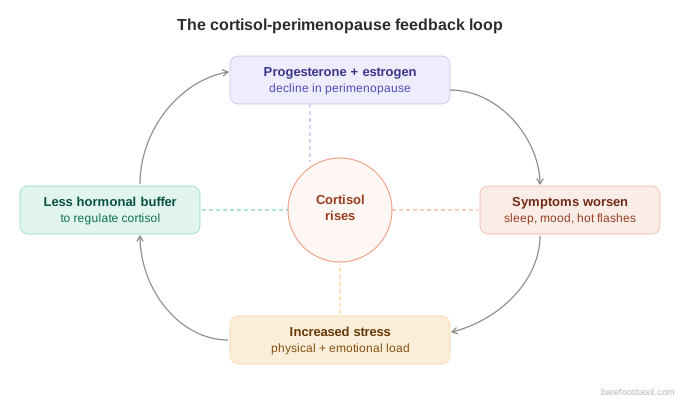
The vicious feedback loop
Perimenopausal symptoms like hot flashes, sleepless nights, and irritability are increasing cortisol as well. And the higher cortisol increases the symptoms, and it becomes a vicious circle (4).
Disturbed circadian rhythm
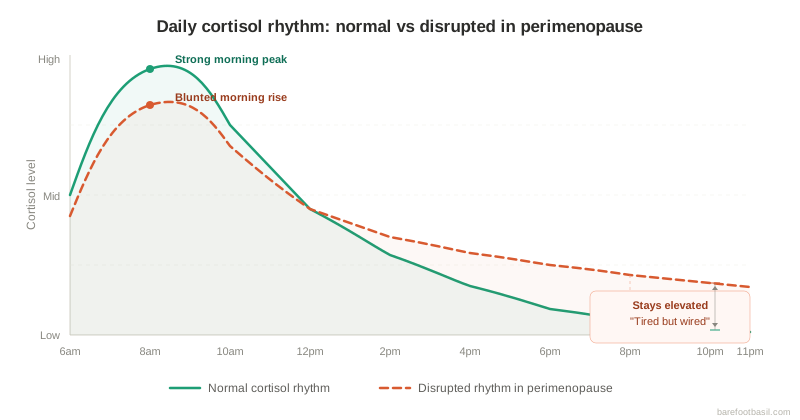
Most perimenopausal women have increased levels of cortisol, with many experiencing disruption in their cortisol rhythm, higher evening cortisol levels, and a blunted morning rise. Normally, cortisol is the highest in the morning and lowest in the evening, but in perimenopause, it can flatten during the day and stay higher in the evening, with many women feeling “tired but wired” (5).
What Are The Signs Your Cortisol Might Be Out of Balance?
Before we get into what might be making things better or worse, it’s worth pausing to check if any of this sounds familiar. These are some of the signs that your cortisol rhythm may be off during perimenopause:
– Feeling wired at night but exhausted in the morning
– Waking up between 2–4 am and not being able to fall back asleep
– Belly fat that doesn’t respond to diet or exercise changes
– Feeling anxious or overwhelmed by things that never used to bother you
– A much shorter fuse than you’re used to
– Brain fog that feels worse than “normal” perimenopause brain fog
– Getting sick more often than usual
– Craving carbs or sugar in the afternoon
– Feeling worse, not better, after intense workouts
If you’re nodding along to several of these, keep reading, especially the next section.
How Cortisol Affects Women Differently Than Men

Ageing affects both women and men, but the cortisol picture in midlife is different for the two sexes, and a lot of the health advice floating around doesn’t account for that.
Women lose their hormonal buffer. Progesterone acts as a natural counterweight to cortisol; it competes for the same receptors and helps keep the stress response in check. Men don’t produce meaningful levels of progesterone, so they never had this buffer to lose. Women in perimenopause lose it rapidly as progesterone is one of the first hormones to decline. That means cortisol has more free rein in a woman’s body.
The stress thermostat works differently. Estradiol helps regulate the HPA axis, the brain-adrenal feedback loop that controls cortisol release. When estrogen fluctuates dramatically in perimenopause, the brain’s cortisol thermostat becomes less reliable. Men’s testosterone also influences cortisol, but testosterone decline is gradual over decades, not the craziness of perimenopause.
Fat storage shifts. After 40, both men and women gain more abdominal (visceral) fat, which is strongly linked to cortisol (6). But women experience an additional shift: premenopausal estrogen promotes fat storage around the hips and thighs, but as estrogen drops, fat distribution moves toward the belly, essentially the same pattern men have throughout life. So women are acquiring a new fat storage pattern at the exact time their cortisol is rising, which makes belly fat even more stubborn.
Most fasting and training research was done on men. This matters more than people realise. Dr. Stacy Sims has pointed out that the metabolic benefits of strategies like fasted training were established in male-only or mixed-sex studies. Women naturally have higher baseline fat oxidation, so there’s less room to “improve” through fasting, and the hormonal cost is higher, especially in perimenopause (7).
Wondering if this is perimenopause?
Check how many of the 100+ known symptoms you're experiencing with our free Perimenopause Symptom Awareness Tool.
Take the Symptom Checker →The "Healthy" Habits That May Be Spiking Your Cortisol
Fasted Training
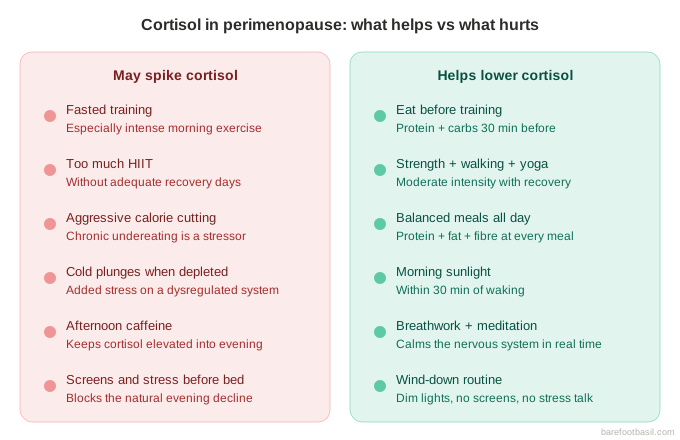
I used to love training on an empty stomach; I felt I could run with more ease and had more energy without any food in my stomach, but now we know that fasted training is not good for women. Morning cortisol is already at its daily peak. Exercising on an empty stomach adds a second stressor; low blood glucose forces the body to produce even more cortisol to mobilise fuel. Dr. Stacy Sims’ work with female athletes shows that women respond differently to fasted training than men do (7). The chronic cortisol elevation can disrupt reproductive hormones, and for perimenopausal women whose progesterone is already low, this can be a problem. I am not saying you can never skip breakfast, but instead, have a bit of carbs and protein before your morning training to lower the cortisol spike.
Over-Exercising and HIIT
If you were used to exercising a lot, it might be very difficult to learn to adapt to your ageing body. Intense exercise is a cortisol-producing stressor; that’s how adaptation works. But the dose matters a lot for women in perimenopause. Research from the Society for Endocrinology shows that repeated high-intensity sessions without proper recovery lead to chronically elevated cortisol, suppressed testosterone, and eventually a blunted stress response (8).
In perimenopause, this looks like:
- pushing harder but getting weaker,
- gaining belly fat despite exercise,
- feeling more anxious after workouts,
- and getting sick or injured more often.
This is a transition period where you need to listen to your body more and focus on long-term health rather than trying to push for short-term results, as your body needs a bit more rest and can’t handle as much physical stress as it used to.

Cold Plunges
Cold exposure is proven to have many benefits and has become popular in recent years. But yet again, women, especially in perimenopause, can react to cold differently from men, and it is more nuanced. Women’s bodies are more sensitive to cold stressors, and a study on women doing regular cold exposure found that after about 4 weeks, the cortisol/ACTH response stopped spiking, while norepinephrine (the focus/mood chemical) continued to increase (9). So over time, it may actually help. But if you are already dysregulated from perimenopause symptoms, like bad sleep, adding another stressor to your body might not be as helpful. If you love cold exposure, see how you feel after, only do short 60–90 second sessions, and start with cold, not freezing water.
Under-Eating and Long-Term Calorie Deficit
Similar to fasted training, aggressive undereating is a stressor to the body and can do more harm than good, especially in perimenopause. Cortisol rises to stabilise blood sugar from liver glycogen. Elevated cortisol promotes abdominal fat storage, muscle breakdown, and metabolic slowdown, the exact opposite of what you’re trying to achieve by cutting calories.
Overall, our bodies are going through a lot of stress during this period, so we need to be a bit more gentle, avoiding stressing our bodies even more. I am not saying you should not do any of the things listed above, especially if you like them, but try to be a bit more mindful and gentle.
How to Actually Lower Cortisol During Perimenopause
Eat Before Your Training (Especially in the Morning)
I am guilty of going for a run on an empty stomach, as I never feel hungry in the morning and feel like I can’t go for as long with food in my belly. But learning from Dr. Stacy Sims, I have started to eat, especially if I train. If you don’t feel too hungry, it doesn’t have to be a big meal; it can be a bit of yogurt with fruit and nuts, or even a small banana with a bit of protein powder in your coffee. Even 100–200 calories of protein with carbs 30 minutes before exercise can make a difference.
A 2024 systematic review of 11 randomised controlled trials found that consuming at least 30g of carbohydrate before or during exercise significantly reduced cortisol rises in 9 out of 11 studies, with a large overall effect size (10). The key is to pair your carbs with some protein and fat, a banana with nut butter, yogurt with fruit, rather than having something sugary on its own, which can cause a blood sugar spike and crash.
Match Your Exercise Intensity to How You Feel
This is the time to be less rigid in your training and to listen to your body. Strength training is a priority as we age, and you should try to do it 2–3 times a week. But it is so much more important to let your body recover and incorporate walking, yoga, and mobility, as well as scheduling recovery days.
If you need more workout inspiration, I have created some great free workouts you can do at home.
Strength training:
Yoga and mobility:
Movement is one of the ways I keep my own stress in check, and strength training especially. I share exactly how to start in my perimenopause strength training guide.
Protect Your Cortisol Rhythm
As I mentioned before, cortisol is not an enemy, but it has a rhythm that helps us deal with stress. Sunlight within 30 minutes of waking signals cortisol to start its natural decline through the day. You also want to guide your cortisol to go down in the evening, and you probably already know the drill. Dim the lights before bedtime, limit blue screens, and avoid stressors before bedtime. So no stressful conversations or news before bed. These are my morning and night routines to help me keep calm and stable:
Stabilise Blood Sugar All Day
Diet is another way to keep your cortisol stable. Eat protein, carbs, and fat at every meal, and avoid simple carbs like sugary drinks and white bread to prevent sugar spikes. You can learn more about nutrition to support your hormones in these articles:
Manage the “Small” Stressors
Even things that might feel small can add up. The coffee in the afternoon, scrolling in bed, overconsumption, and having an intense conversation with your partner before sleep, work notifications while trying to wind down. All these little things add up and keep your body stressed. Set yourself boundaries and learn to understand what doesn’t serve you. I have uninstalled all social media apps from my phone and only have them on my laptop, so I don’t end up scrolling in bed. If you really need that social media fix, at least get rid of accounts that make you stressed and add some feel-good accounts that make you happy and more hopeful.
I made my phone very boring, so I picked up a book instead of looking at the screen. I have learned to live with only one or two cups of coffee in the morning and drink it as a slow wake-up time instead of rushing around. I am slowly switching from coffee to matcha, which helps me balance the energy out.
My partner and I have a “no serious talk” before bed rule, and have a 10-minute meditation before bed instead of trying to solve our problems and get the brain all fired up.
Breathwork and Nervous System Regulation
Breath is such a simple but powerful and free tool that we all should master. Nothing works better than slowing down your breath to calm you down and make things feel calmer. If you want to learn more about breathwork, I have created some great resources for you if you don’t know where to start:
If you want to learn more about breathwork:
Learning to calm the racing thoughts is another skill that can help us calm down and reduce cortisol. Meditation is very important in my life, especially after suffering from burnout. It helps me be less overwhelmed and less stressed out about the things that don’t matter.
As well as breathwork, I have many articles to help you start on your meditation journey:
Best YouTube Channels for Guided Meditation
I also like to use my red light therapy panel whilst meditating, and feel that red light helps me relax even more.
After using for a while, I noticed that on the days I use it, I feel more relaxed and can focus better, and I wanted to see if there is any science showing that it can lower cortisol levels.
When to Talk to Your Doctor About Cortisol
The symptoms of high cortisol overlap with perimenopause symptoms and even thyroid dysfunction. Self-diagnosing via social media is not something you should do.
If you feel all high cortisol symptoms, ask your health provider for salivary cortisol testing (4-point) or a DUTCH test for a full picture of cortisol rhythm and metabolites. A single blood test might not be enough to assess cortisol patterns, so ask your doctor for a full cortisol assessment.
What About Supplements for Cortisol?
Adaptogens like ashwagandha, rhodiola, and shilajit, as well as magnesium and phosphatidylserine, have research supporting cortisol regulation, but the evidence is mixed and dose-dependent. I will be covering cortisol-related supplements in another article, as I feel they deserve a bit more explanation.
Frequently Asked Questions About Cortisol and Perimenopause
Does perimenopause increase cortisol levels?
Yes. Research shows cortisol tends to rise as estradiol and progesterone decline. With less progesterone to buffer stress, the body becomes more reactive to cortisol, creating a cycle that can worsen symptoms like belly fat, anxiety, and insomnia (1)(2).
What does high cortisol feel like during perimenopause?
The main symptoms show up as a weird tired-but-wired feeling, especially in the evening. Feeling more anxious and bothered about things that never used to bother you. Having less patience, as well as increasing belly fat even if your fitness and nutrition haven’t changed.
Can exercise make cortisol worse during perimenopause?
Yes and no. Exercise tends to reduce cortisol levels and makes us feel good and happy. But too much and too intense exercise without adequate recovery can increase cortisol. So make sure you listen to your body and prioritise recovery.
Are cold plunges good or bad for cortisol?
Same as with exercise — it can be good and bad. If your body is already stressed out, immersing yourself in ice-cold water might stress your body even more. But if they make you feel good and you love them, then go for it, just make sure the water is not too cold and you stay submerged for short periods.
What’s the fastest way to lower cortisol naturally?
Taking a few deep breaths. Inhale for 6 or 8 counts and exhale for 6 or 8. Repeat this for as long as you need until you feel calmer and more relaxed.
Does cortisol cause belly fat during perimenopause?
Elevated cortisol promotes visceral fat storage, and declining estrogen shifts fat distribution toward the abdomen. The combination of these two is why belly fat is so stubborn in midlife.
The Bigger Picture
We can’t blame cortisol for all the unwanted changes in our bodies after we hit 40. Yes, imbalanced cortisol can cause us to gain weight as well as increase other perimenopause symptoms, but our bodies are very complex, and many factors in life can contribute. I feel like in perimenopause, I am learning to understand the importance of balance in life and being a bit more gentle and forgiving towards our bodies and the changes they are going through.
Health Disclaimer: This post is for informational purposes only and is not medical advice. Always consult a qualified healthcare professional before making changes to your supplements, medications, or treatment plan, particularly during perimenopause or if you have an existing health condition.
References
- Grub, J., Süss, H., Willi, J., & Ehlert, U. (2021). Steroid Hormone Secretion Over the Course of the Perimenopause: Findings From the Swiss Perimenopause Study. Frontiers in Global Women’s Health, 2. https://doi.org/10.3389/fgwh.2021.774308
- Caufriez, A., Leproult, R., & Copinschi, G. (2018). Circadian profiles of progesterone, gonadotropins, cortisol and corticotropin in cycling and postmenopausal women. Chronobiology International, 35, 72–79. https://doi.org/10.1080/07420528.2017.1381971
- Gordon, J., Eisenlohr-Moul, T., Rubinow, D., Schrubbe, L., & Girdler, S. (2016). Naturally Occurring Changes in Estradiol Concentrations in the Menopause Transition Predict Morning Cortisol and Negative Mood in Perimenopausal Depression. Clinical Psychological Science, 4, 919–935. https://doi.org/10.1177/2167702616647924
- Woods, N., Carr, M., Tao, E., Taylor, H., & Mitchell, E. (2006). Increased urinary cortisol levels during the menopause transition. Menopause, 13, 212–221. https://doi.org/10.1097/01.gme.0000198490.57242.2e
- Woods, N.F., Mitchell, E.S., & Smith-Dijulio, K. (2009). Cortisol levels during the menopausal transition and early postmenopause: observations from the Seattle Midlife Women’s Health Study. Menopause, 16(4), 708–718. https://doi.org/10.1097/gme.0b013e318198d6b2
- Strain, G.W., Zumoff, B., Strain, J.J., Levin, J., & Fukushima, D.K. (1980). Cortisol production in obesity. Metabolism, 29(10), 980–985. https://doi.org/10.1016/0026-0495(80)90043-8
- Sims, S. Fasting for Active Women: Risks. https://www.drstacysims.com/newsletters/articles/posts/fasting-for-active-women-risks
- Society for Endocrinology. (2024). Overtraining and the Endocrine System: Can Hormones Indicate Overtraining? The Endocrinologist, 153. https://www.endocrinology.org/endocrinologist/153-autumn-24/features/overtraining-and-the-endocrine-system-can-hormones-indicate-overtraining/
- Leppäluoto, J., Westerlund, T., Huttunen, P., Oksa, J., Smolander, J., Dugué, B., & Mikkelsson, M. (2008). Effects of long-term whole-body cold exposures on plasma concentrations of ACTH, beta-endorphin, cortisol, catecholamines and cytokines in healthy females. Scandinavian Journal of Clinical and Laboratory Investigation, 68(2), 145–153. https://doi.org/10.1080/00365510701516350
- Kovar, L., Selldén, E., & Gläser, S. (2024). The acute effects of pre- and mid-exercise carbohydrate ingestion on the immunoregulatory stress hormone release in experienced endurance athletes — a systematic review. Frontiers in Sports and Active Living, 6. https://doi.org/10.3389/fspor.2024.1264814

Silvija Meilunaite, PN1-NC, CSMC, is a certified nutrition coach and menopause coaching specialist. Combining current scientific research with her own experience of perimenopause, she writes evidence-based articles, practical guides, and in-depth product reviews to help women over 40 make informed decisions about nutrition, strength training, recovery, supplements, non-toxic living, and wellness products.